The pros and cons of owning a Ragdoll — I get asked about this all the time, usually by people who’ve fallen for the photos online and want to know if the reality matches. The honest answer is that Ragdolls are genuinely wonderful cats, but they’re not the right fit for everyone. There are real trade-offs. This post covers both sides from someone who has raised them and lives with them — no fluff, just what you actually need to know before you commit.
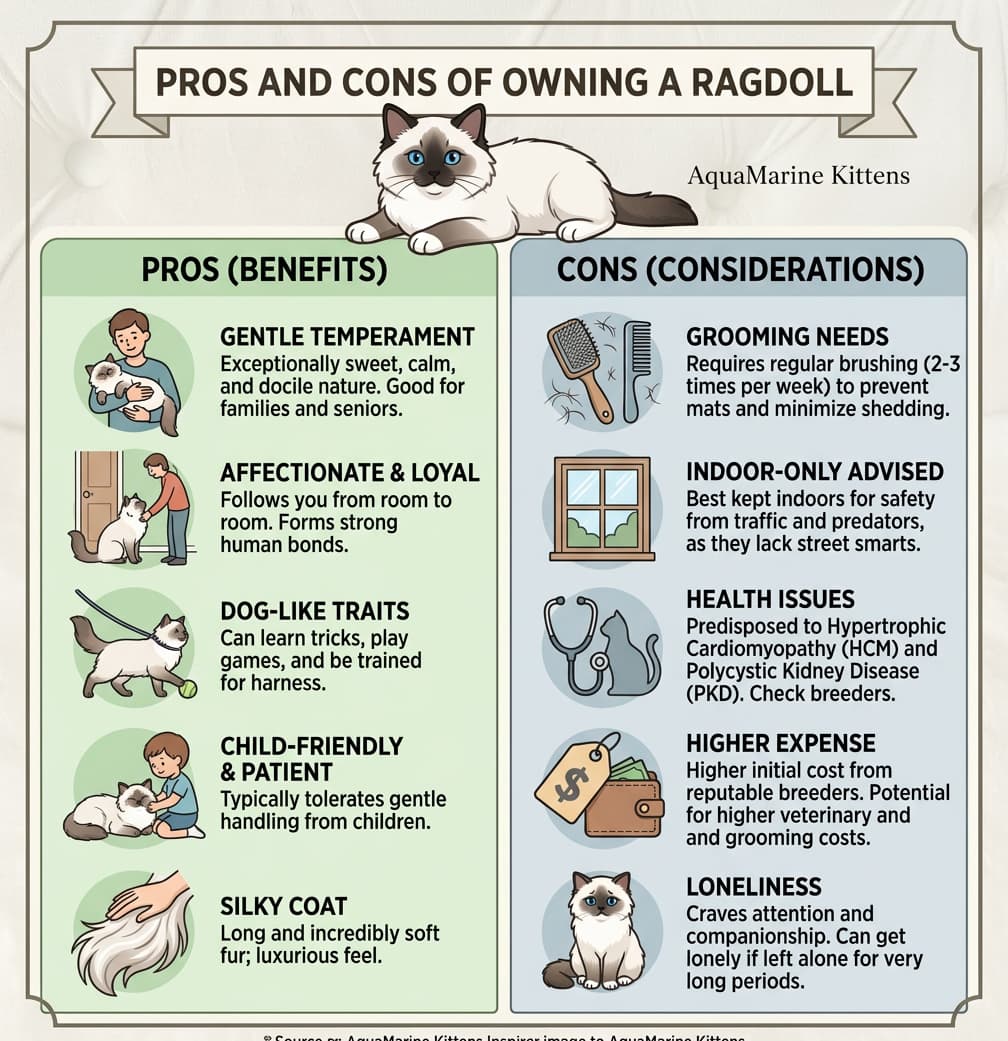
Table of Contents
Quick Summary — Pros and Cons of Owning a Ragdoll at a Glance
If you want the condensed version before we go into detail, here it is:
| Pros | Cons |
|---|---|
| Calm, gentle temperament | Very needy — doesn’t do well alone for long |
| Excellent with kids and other pets | Follows you everywhere — little personal space |
| Quiet but communicative | Coat needs more attention than a shorthair |
| Indoor-only — no need for outdoor access | Can be prone to HCM without health-tested lines |
| Adapts well to apartments and smaller homes | Expensive to buy from a reputable breeder |
| Lower shedding than most long-haired breeds | Ongoing costs — quality food and vet care add up |
| Big, substantial breed (males up to ~20 lbs) | Larger size means more food and litter costs |
| Bonds deeply with their family | Not suited to very independent owners |
The Pros of Owning a Ragdoll
The temperament is genuinely different from most cats
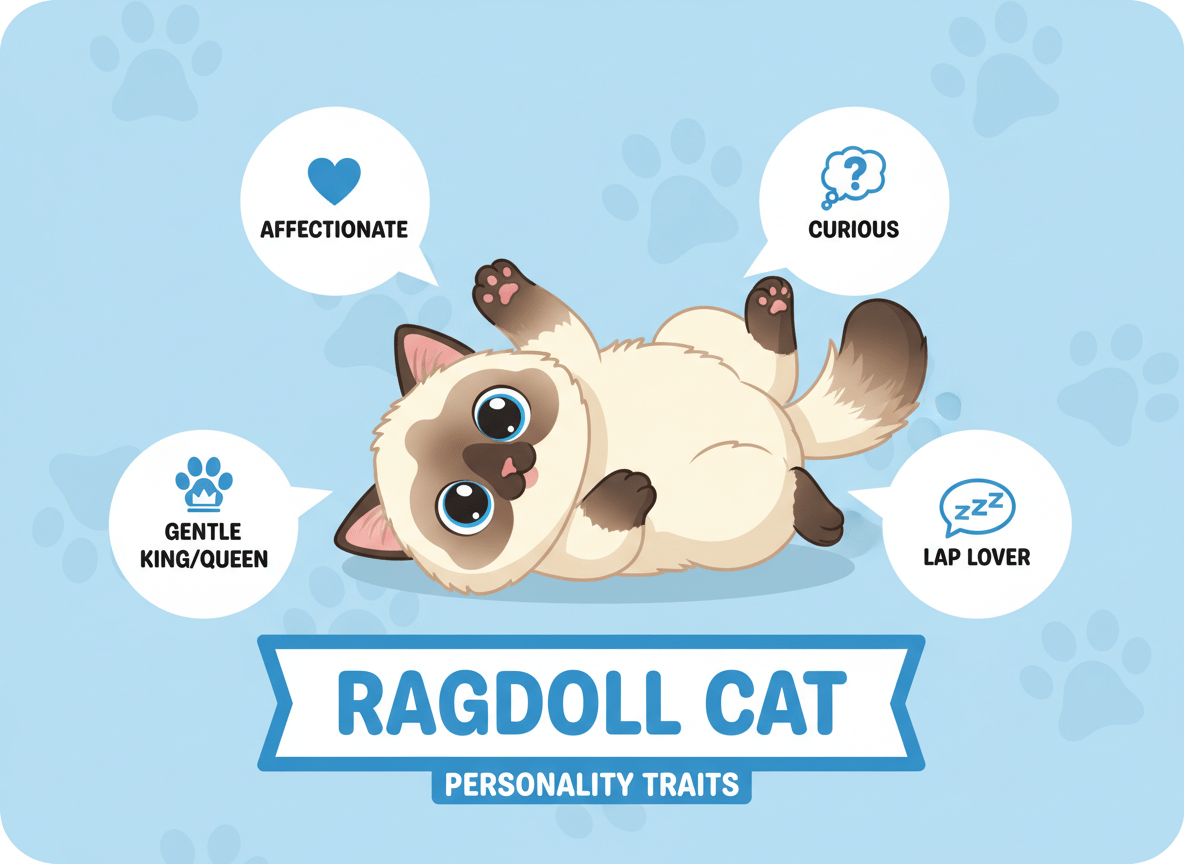
Ragdolls are calm in a way that stands out from other breeds. They don’t bolt when something new happens, they don’t startle easily, and they settle into households without the drama a lot of cats bring. They go limp when you pick them up — the famous Ragdoll flop — and it’s real. Holding a fully relaxed Ragdoll is a different experience from holding most cats.
Great with children and other pets
Ragdolls are patient. They don’t lash out easily, they tolerate being handled imperfectly by young children, and they adjust to new animals without excessive territorial behavior. They’re consistently one of the breeds I’d recommend without hesitation to families with kids. The temperament has been bred specifically for this kind of companion role and it shows.
Quiet but still communicative
Ragdolls have soft voices. They’re not silent — they’ll let you know when they want food, when they’re following you somewhere, or when something is off — but they don’t yowl, they don’t demand constantly, and they won’t bother neighbors through thin apartment walls. For a cat that’s as social as a Ragdoll, the softness of their communication is a real plus.
Perfectly suited to indoor-only life
Ragdolls are indoor cats by nature. They don’t pace at the door, they don’t have the territorial drive that makes some cats miserable without outdoor access, and they genuinely don’t need a garden. This makes them ideal for apartments and city living. A good window perch, a cat tree, and regular interaction with you covers their needs without needing any outdoor space at all.
Lower shedding than the coat suggests
The long coat looks like a shedding nightmare. It’s actually not. Ragdolls have a single-layer coat with no dense undercoat, which means day-to-day shedding is lower than many short-haired domestic cats. A brush once a week keeps it in good shape outside of shedding season. More detail in the Ragdoll shedding guide here.
They’re a big breed — and that’s part of the appeal
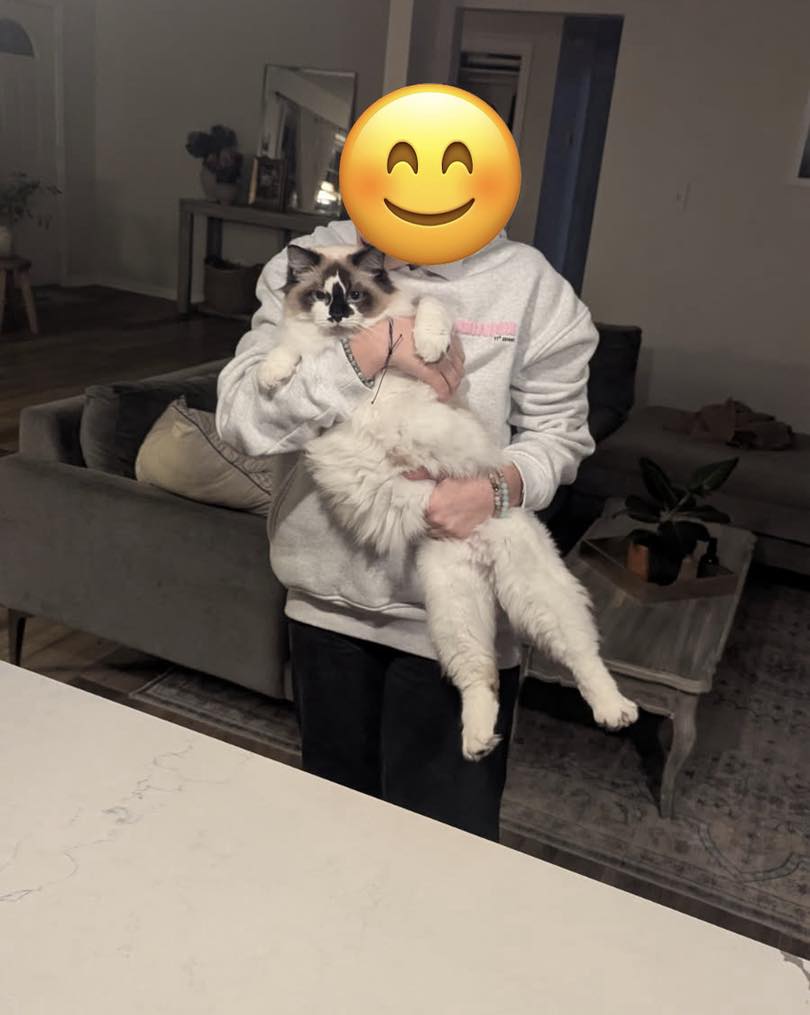
Ragdolls are one of the larger domestic cat breeds out there. Males typically reach up to around 20 lbs at a healthy adult weight — and honestly, I’ve had enough males in our program mature out at a solid 17-21 lbs that I’d call it typical rather than an outlier. Females stay noticeably smaller, usually topping out around 15 lbs. That substantial, sturdy-boned frame is part of what makes the famous Ragdoll flop so noticeable — there’s a lot of cat to go limp in your arms. It’s also worth knowing that Ragdolls are slow to mature; most don’t hit their full adult size until around 3-4 years old, so that big, solid boy you’re picturing takes some time to grow into. If you love a substantial, heavy-boned cat instead of something dainty, this is a real point in the Ragdoll’s favor.
The Cons of Owning a Ragdoll
They are needy and need company most of the day
This is the biggest one and the thing that catches most new Ragdoll owners off guard. Ragdolls are not independent cats. They need attention, they need company, and they don’t handle being alone for long hours consistently. If you work a standard 8-hour day with no other pets in the home, that’s something you need to think about seriously before getting one. The solution is usually a second cat — which we strongly recommend anyway.
They follow you everywhere — personal space becomes optional
Ragdolls follow you from room to room. They will be outside the bathroom door. They will relocate to wherever you’ve moved. They want to be in the same room as you, ideally on the same piece of furniture. This is lovely if you like that level of companionship. It can feel a bit suffocating if you’re someone who wants a cat that’s more independent. There’s not much personal space with a Ragdoll, and that bothers some people.
The coat needs more attention than a shorthair
It’s not high maintenance — but it is more maintenance than a short-haired cat. The long coat can mat if left entirely ungroomed, particularly behind the ears, under the armpits, and on the hind legs. Weekly brushing prevents this and keeps the coat looking its best. During shedding season you’ll need to do it more often. It’s manageable — I do it once a week and that’s usually enough — but it’s a real commitment that some people underestimate going in.
Health risks without proper breeding — HCM is real
Ragdolls can be predisposed to HCM (hypertrophic cardiomyopathy), a heart condition that can be hereditary. This is why health testing in the breeding program matters so much. A reputable breeder will have cardiac screening records for the parent cats. Going to a cheap or unscreened source to save money upfront can result in far larger vet bills down the line — and heartbreak. This is non-negotiable when choosing where to get your kitten.
They’re expensive — upfront and ongoing
A Ragdoll from a reputable, health-tested breeder is a real financial commitment. The initial cost reflects the breeding program, health testing, vaccinations, and early care that goes into each kitten. And that’s before the ongoing cost of quality food, routine vet care, and any health needs that come up over a 12 to 15+ year lifespan. Going in with realistic expectations about the cost is part of responsible ownership.
They Are Needy — Let’s Talk About That
I want to go into this one a bit more because it’s the thing that surprises people most. The word “needy” sounds negative but it’s really just describing what this breed is — a companion cat. They were bred specifically to be people-oriented and that’s exactly what they are.
Most Ragdolls need a person present most of the day, or at least some pets with them. They’re talkative in their own soft way — not loud, but they communicate. They’ll follow you down the hall and wait for you to sit down so they can be near you. They like to know where you are. That’s just how they’re wired.
The majority of Ragdolls are like this. There are some shy individuals or cats that are a bit more reserved — personality varies between cats — but the breed tendency is firmly toward attachment and neediness. If you want a cat that’s happy to ignore you for hours, a Ragdoll is not your cat.

The flip side is that this attachment is exactly what makes Ragdolls so rewarding for the right owner. People who work from home, have someone around most of the day, or live with other pets consistently tell me their Ragdoll is one of the best decisions they’ve ever made. The connection is real and it deepens over years. They’re not just a cat that lives in your house — they’re genuinely part of the household in a way that’s hard to describe until you’ve had one.
From Our Cattery — AquaMarine Kittens
We always recommend getting a second cat — whether that’s a second Ragdoll or a rescue kitten. Not because one Ragdoll isn’t wonderful, but because any social animal does better with company, and your Ragdoll will be noticeably happier and more settled if they have a companion when you’re out. We’d rather set families up for success from the start than have them reach out months later wondering why their cat seems restless.
The Coat — More Work Than a Shorthair, Less Than You’d Expect
The coat is listed in the cons because it is more work than a shorthair — but I don’t find it hard, honestly. I brush once a week and that’s usually all it needs outside of shedding season. The coat is single-layer and silky, which means it doesn’t mat as aggressively as some long-haired breeds. As long as you keep up a basic weekly routine, the coat stays in good shape without a lot of effort.
Where people run into problems is when they skip grooming for too long and tangles form, especially behind the ears and under the armpits. Once a mat forms, it needs to be carefully removed — sometimes by a groomer if it’s bad. The fix is prevention: a quick weekly brush is all it takes. Start that routine from the moment your kitten arrives home so they get used to it early and actually enjoy it as adults. More detail in our full shedding and coat guide.
The Financial Reality of Owning a Ragdoll
This is a con that doesn’t get talked about enough. The upfront cost of a Ragdoll from a reputable, health-tested breeder is significant. And then there’s everything that follows over the life of the cat — food, vet visits, vaccinations, parasite prevention, and any health issues that come up. Their larger size plays into this too — a 17-21 lb male eats more than a typical 8-10 lb shorthair, so factor that into your food budget.
- Initial kitten cost from a reputable breeder. This is not an area to cut corners. The price reflects health testing, genetic screening, quality food during development, early socialization, and responsible breeding practices. Cheap Ragdolls exist — they come with higher risk of health problems and shorter lifespans.
- Food. We raw-feed our kittens and the difference in coat, muscle, and digestion is visible. A raw diet or high-quality wet food is an ongoing cost, but it’s also an investment in fewer vet visits over a lifetime. Bigger cats simply eat more, so budget accordingly, especially for males. More on this in our raw feeding guide.
- Routine vet care. Annual wellness visits, vaccinations, dental checks, and periodic cardiac screening add up. These are non-optional for responsible ownership.
- Unexpected costs. Health issues can arise in any cat regardless of breed. Pet insurance is worth considering, especially for a breed that can have hereditary health predispositions if lines aren’t properly tested.
According to International Cat Care, the lifetime cost of cat ownership is often significantly underestimated. Going in with a realistic budget and a plan for unexpected vet costs is part of being a responsible owner — not just for Ragdolls, but for any cat.
Is a Ragdoll Right for You?
Honest reflection is more useful than any breed guide here. The pros and cons of owning a Ragdoll point in a clear direction depending on your situation.
- You want a cat that bonds closely and is genuinely part of your daily life, not just a cat that lives in the house.
- You work from home, have flexible hours, or someone is around most of the day — or you’re getting two cats.
- You have children or other pets and want a cat that’s consistently patient and gentle.
- You live in an apartment or smaller home and want an indoor-only cat that won’t feel restricted.
- You’re comfortable with a basic weekly grooming routine and a quality diet.
- You like a big, substantial cat — males can reach up to around 20 lbs — rather than something small and dainty.
- You’re willing to invest in a cat from a health-tested, reputable breeder and plan for the long-term costs of ownership.
- You want an independent cat that’s happy to do its own thing while you go about your day — a Ragdoll will always want to be in your space.
- You’re gone for very long hours daily with no other pets in the home and no plans to get a companion for them.
- You’re looking for a low-budget option — a healthy, well-bred Ragdoll from a reputable source is a real investment, and their bigger size means higher food costs too.
- You have strong allergies to cats — Ragdolls are not hypoallergenic, and while they shed less than some breeds, they still produce allergens.
Video
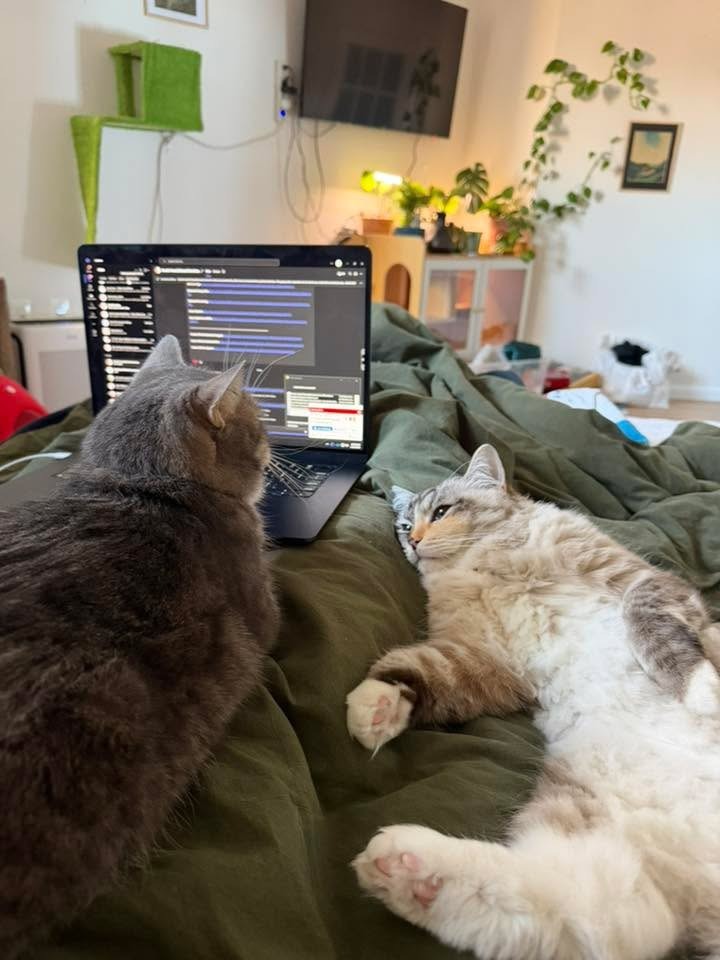
This video gives a real-world look at what life with a Ragdoll is actually like — not ours, but a good honest perspective on the day-to-day experience of owning one.
Note: not our cats — included as a general reference on the Ragdoll ownership experience.
Frequently Asked Questions — Pros and Cons of Owning a Ragdoll
Final Thoughts
The pros and cons of owning a Ragdoll come down to one central question: are you looking for a companion animal that’s genuinely part of your daily life, or do you want a more independent cat that does its own thing? If you’re in the first camp, Ragdolls are hard to beat. If you’re in the second, there are better breeds for your lifestyle and that’s fine to know upfront.
For the right person, a Ragdoll is one of the most rewarding cats you can own. They grow with you, bond deeply, and bring a kind of settled, constant companionship that a lot of people don’t experience until they’ve had one. Just go in with realistic expectations — especially about the neediness, the coat, the size, and the cost — and you’ll be set up well.
Looking for a Ragdoll or Cherubim Kitten?
Raw-fed, TICA-registered, health-tested, and raised in our Virginia home. We’ll help you figure out if a Ragdoll is the right fit — and find the right kitten if it is.
View Available Kittens