Foods that are toxic to cats is one of those topics every cat owner needs to know — not just skim once and forget. Some of the most dangerous things for your cat are sitting in your kitchen right now, and a few of them will genuinely surprise you. This post covers the main foods that are toxic to cats, including Ragdolls, what they do to the body, and what to do immediately if your cat gets into something they shouldn’t have.
If Your Cat Has Already Eaten Something Toxic
Don’t wait for symptoms. Call your vet immediately or contact the ASPCA Animal Poison Control Center: 888-426-4435 (available 24/7 — a fee may apply). Have the product or ingredient information ready. Time matters with poisoning.
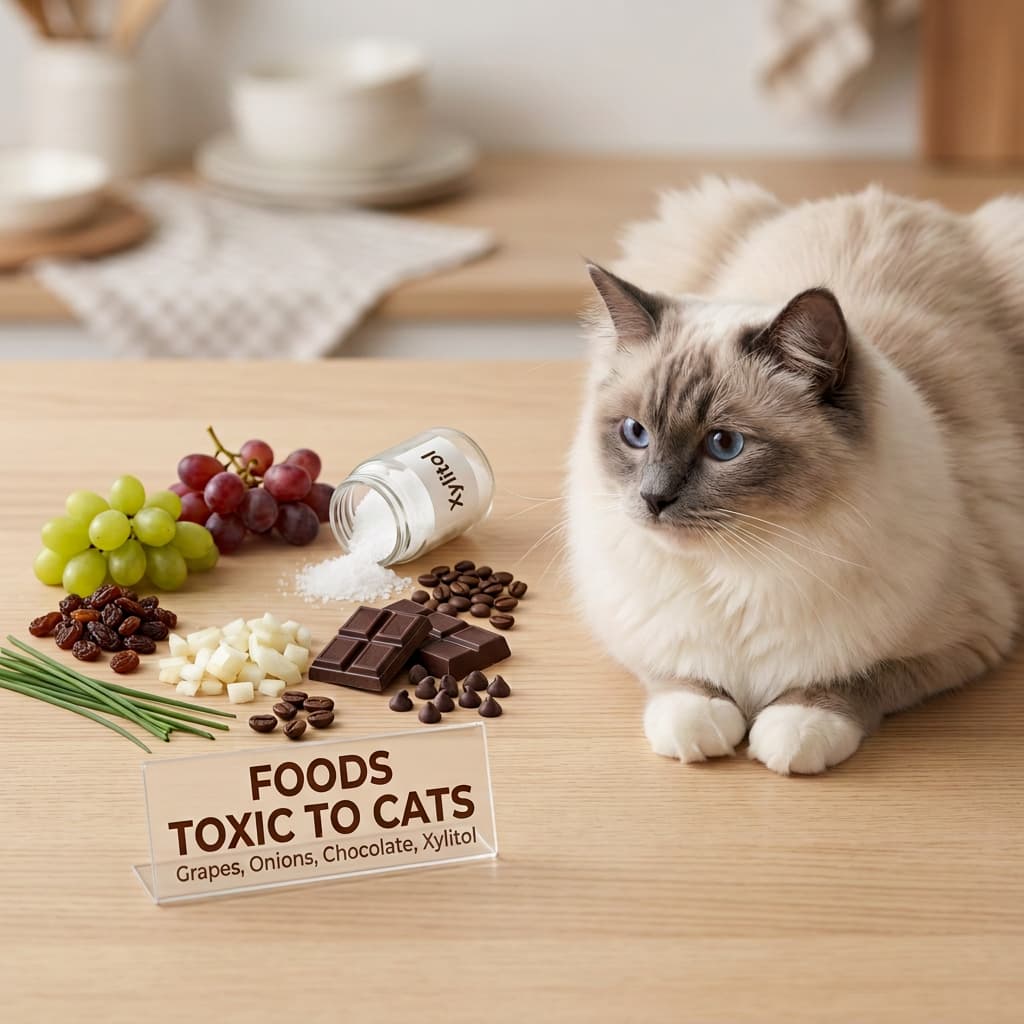
Table of Contents
Quick Reference — Foods That Are Toxic to Cats at a Glance
Here’s the summary table before we go into detail. If you’re in a hurry or just want a printable reference, this covers the key foods that are toxic to cats and their danger level:
| Food | Danger Level | Main Risk |
|---|---|---|
| Onions, leeks, chives | High | Red blood cell damage, anemia |
| Chocolate | High | Theobromine poisoning, seizures |
| Xylitol (sugar-free products) | High | Liver failure, low blood sugar |
| Grapes and raisins | High | Kidney failure |
| Alcohol | High | Liver and brain damage |
| Caffeine (coffee, tea, energy drinks) | High | Heart and nervous system toxicity |
| Raw yeast dough | High | Ethanol toxicity, bloat |
| Macadamia nuts | Moderate | Weakness, vomiting, tremors |
| Raw fish (frequent / large amounts) | Moderate | Thiamine deficiency |
| Cooked bones | Moderate | Splintering, internal puncture |
| Dairy (milk, cream) | Moderate | Lactose intolerance, GI upset |
| Human medications | High | Varies — many are lethal to cats |
The 12 Foods That Are Toxic to Cats
Onions, Leeks, and Chives — The Whole Allium Family
This is one of the most important ones to know. Onions, leeks, chives, spring onions, and shallots are all toxic to cats. They contain compounds that damage red blood cells and cause Heinz body anemia — a serious condition that can develop even from small or repeated exposures over time. Cooked onion is just as dangerous as raw. Any dish with onion in it — stock, sauces, soups, stir-fries — should never go near your cat. This applies to Ragdolls too, who are often described as “food-curious” and will investigate what you’re cooking.
Chocolate
Chocolate contains theobromine and caffeine — both of which cats cannot process the way humans do. The darker the chocolate, the higher the concentration and the more dangerous it is. Dark chocolate and baking chocolate are the worst. White chocolate is the least dangerous but still not safe. Symptoms include vomiting, diarrhea, rapid heart rate, muscle tremors, and in severe cases, seizures. Cats are less likely than dogs to seek out chocolate because they can’t taste sweetness, but it’s still worth keeping it out of reach — especially around kittens who will try anything.
Xylitol — Found in Sugar-Free Products
Xylitol is an artificial sweetener found in sugar-free gum, some peanut butters, certain medications, mouthwash, and “sugar-free” baked goods. In cats it can cause a serious drop in blood sugar and liver damage. It doesn’t take a large amount. This one is worth checking labels for — it’s in more products than most people expect. If you use xylitol-containing products, keep them completely out of reach.
Grapes and Raisins
Grapes and raisins are toxic to cats and dogs. The exact compound responsible isn’t fully understood yet, but both have been linked to sudden kidney failure. There is no established safe amount — even a small quantity can cause problems in some cats, and you can’t predict in advance which cats will react severely. Just keep them away entirely. Raisins in baked goods count too.
Alcohol — Including Fermented Foods
Any amount of alcohol is dangerous for a cat. Their livers cannot process ethanol the way a human liver can, and even a small amount — a sip of beer, wine, or spirits — can cause vomiting, disorientation, breathing problems, low body temperature, and in enough quantity, coma or death. This includes fermented foods, raw bread dough (which produces ethanol as it rises), and alcohol-based desserts. If your cat ever accidentally gets into alcohol, treat it as an emergency.
Caffeine — Coffee, Tea, Energy Drinks
Caffeine is toxic to cats in even relatively small amounts. It affects the nervous system and the heart, causing rapid heart rate, restlessness, muscle tremors, and in large doses, seizures. Coffee grounds are particularly dangerous because the concentration is high. Keep coffee, tea, energy drinks, and any product containing caffeine completely away from your cats. This includes some medications that contain caffeine as an ingredient.
Raw Yeast Dough
Raw bread or pizza dough containing active yeast is dangerous for two reasons. First, the dough expands inside the warm stomach, which can cause bloat and serious discomfort. Second, as the yeast ferments, it produces ethanol — so a cat that eats raw dough can essentially become alcohol-poisoned from the inside. Cooked bread is fine in very small amounts as an occasional treat, but raw dough is a definite no.
Macadamia Nuts
Macadamia nuts are toxic to cats (and dogs). The exact mechanism isn’t fully understood, but they cause weakness, vomiting, tremors, and elevated body temperature. They’re not as immediately life-threatening as some of the foods above, but they’re still dangerous and should be kept out of reach. Other nuts like walnuts can also be problematic — high fat content causes digestive upset and some nuts carry mold toxins.
Raw Fish Given Too Frequently
This one surprises people — especially those who raw-feed their cats. Raw fish in large or frequent amounts contains an enzyme (thiaminase) that destroys thiamine (Vitamin B1), which cats need for normal neurological function. Occasional raw fish is fine, but a diet heavy in raw fish over time can lead to thiamine deficiency. Commercial raw cat food is formulated to avoid this. If you’re preparing raw at home, variety and proper supplementation matter. Small pieces of cooked fish as an occasional treat are also fine.
Cooked Bones
Raw bones are generally fine for cats — they’re soft and flexible enough to chew and digest safely. Cooked bones are a different story. Cooking makes bones dry and brittle, and brittle bones splinter into sharp shards. Those shards can puncture the mouth, esophagus, stomach, or intestines. It’s not toxicity in the traditional sense, but the injury risk is real and serious. If you’re raw-feeding, raw bones are fine. Cooked bones from your dinner — no.
Dairy — Milk, Cream, Cheese
Dairy is not toxic to cats in the way that onions or chocolate are — it won’t cause poisoning. But most adult cats are lactose intolerant, meaning they don’t have enough of the lactase enzyme to digest lactose properly. The result is digestive upset: vomiting, diarrhea, and stomach pain. Kittens can handle their mother’s milk but lose the ability to process cow’s milk as they grow. The occasional small piece of hard cheese is usually fine, but a bowl of milk is likely to cause problems. Don’t rely on it as a treat.
Human Medications
This one doesn’t get enough attention. Human medications — including common ones like paracetamol (acetaminophen / Tylenol), ibuprofen, aspirin, and antidepressants — are highly toxic to cats. Cats lack the liver enzymes to process many drugs that humans take safely. Paracetamol in particular is rapidly fatal to cats even in very small doses. Never give your cat a human medication without specific veterinary guidance, and keep all medications stored where cats cannot access them. A curious Ragdoll that knocks a pill off a counter and investigates it is at real risk.
Symptoms of Cat Poisoning to Watch For
If your cat has eaten something from the list above — or something you’re not sure about — these are the symptoms that indicate something is wrong. Don’t wait for multiple symptoms to appear. One is enough to call the vet.
- Vomiting or diarrhea — especially if sudden and without other explanation.
- Lethargy or weakness — your cat seems flat, unresponsive, or unable to stand properly.
- Loss of appetite — refusing food when they were eating normally before.
- Tremors or seizures — muscle trembling, shaking, or loss of coordination.
- Difficulty breathing — labored, rapid, or shallow breathing.
- Pale or yellow gums — pale gums suggest anemia or shock; yellow suggests liver involvement.
- Excessive drooling — especially if sudden and not typical for your cat.
- Increased thirst or urination — can be a sign of kidney involvement (grapes, raisins).
- Collapse — if your cat collapses or loses consciousness, this is an immediate emergency.
What to Do If Your Cat Eats Something Toxic
The most important thing is to act quickly and not wait to see how things develop. Many toxins cause internal damage before any visible symptoms appear — by the time a cat is visibly unwell from some poisons, significant damage has already been done.
- Don’t panic, but don’t wait. Stay calm so you can act clearly, but contact your vet or poison control immediately — don’t adopt a “wait and see” approach with suspected poisoning.
- Call your vet or ASPCA Poison Control: 888-426-4435. This line is available 24/7. A consultation fee applies but it’s worth it. Have the product name and ingredient list ready if possible.
- Do not induce vomiting unless instructed. Unlike dogs, inducing vomiting in cats is not straightforward and can cause additional harm. Only do this if specifically told to by a vet or poison control.
- Bring the packaging. If you’re going to a vet clinic, bring the product or packaging so they know exactly what was ingested. This helps them select the right treatment immediately.
- Note the time and amount. If you know when your cat ate the substance and roughly how much, that information helps the vet assess the severity and urgency.
According to the ASPCA Animal Poison Control Center, the most common reasons cat owners call are plants, human medications, and human foods — all of which are entirely preventable with awareness. Bookmark this page and save the poison control number in your phone. You hope you never need it, but when you do, you need it fast.
A Note on Ragdolls, Cherubim Cats, and Raw Feeding
Ragdolls and Cherubim cats are curious, people-oriented cats. They follow you into the kitchen, they investigate what’s on your plate, and they’ll stick their nose into a bowl if you look away for a second. That personality trait — which is one of the things people love most about the breed — also means you need to be more deliberate about food safety than you might with a more independent cat.
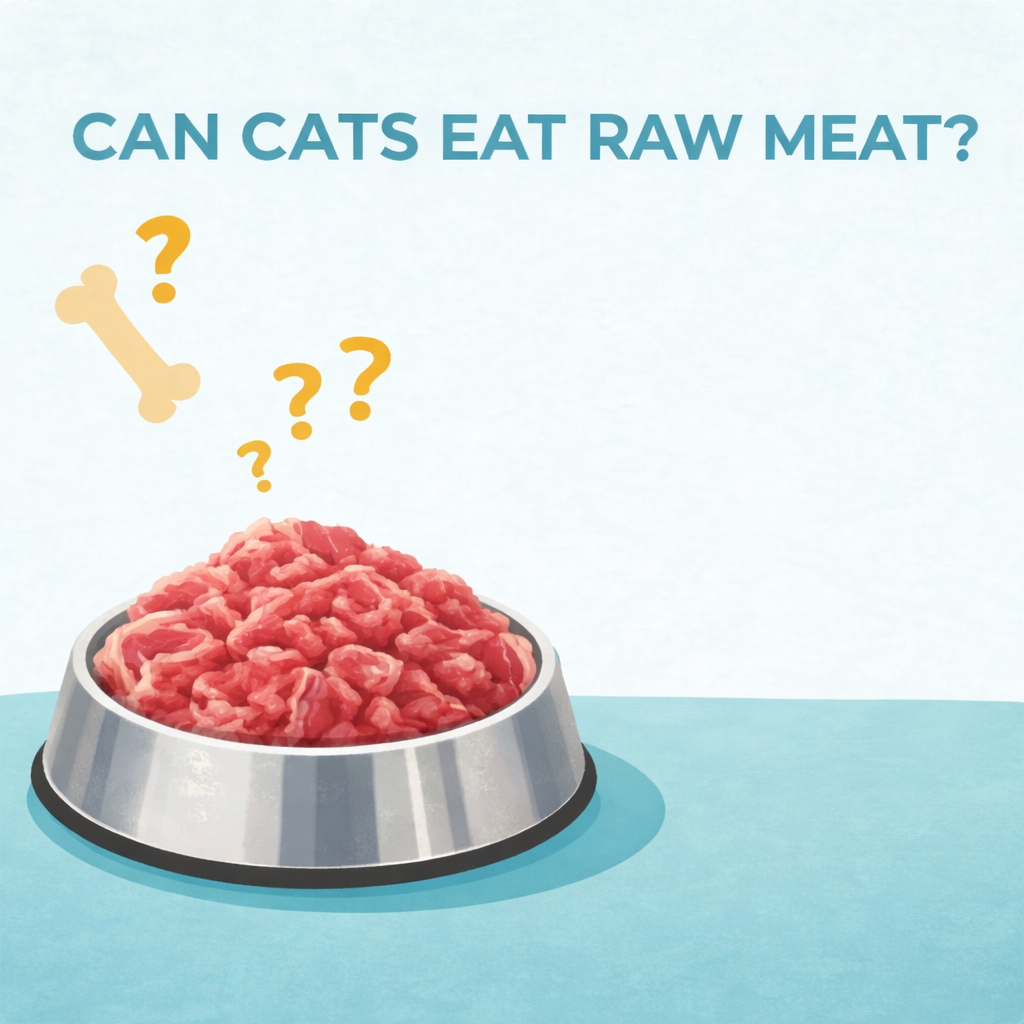
At AquaMarine Kittens, we raw-feed all our cats and kittens. Raw feeding done properly is one of the best things you can do for a cat’s health — but it has to be done with care. Properly formulated raw food is nutritionally complete. Random scraps from the table are not. The safety of raw feeding comes from using quality, balanced raw cat food — not from giving your cat whatever raw ingredients you have in the fridge.
If you’re raw-feeding or thinking about it, read the guide on why cats eat raw meat and how to do it safely. If you’re transitioning your cat’s food, the food transition guide covers that step by step.
What Human Foods Are Actually Safe for Cats?
After that list, you might be wondering what you can give your cat. The short answer: keep it simple and keep it plain.
- Plain cooked chicken, turkey, or beef. No seasoning, no onion, no sauce. Just plain cooked meat. This is the safest and most appropriate treat for a cat because it aligns with what they’re built to eat.
- Plain cooked fish. Salmon, tuna, and white fish in small amounts are fine as an occasional treat. Not as a meal replacement and not every day — but a small piece is not a concern.
- Plain cooked egg. Small amounts of scrambled or boiled egg — no salt, no butter. A good source of protein occasionally.
- Plain cooked vegetables in small amounts. Pumpkin, carrot, and cooked green beans are safe. Cats don’t need vegetables — they’re obligate carnivores — but these won’t harm them. Pumpkin in small amounts can actually help with digestive irregularity.
- Blueberries. Safe in very small amounts and occasionally. Not a necessary part of a cat’s diet but not harmful in small quantities.
The rule of thumb for anything not on this list: if you’re not sure, don’t give it. Cats are obligate carnivores and have no nutritional need for most human foods. When in doubt, stick to their regular food and save the treats for something cat-appropriate.
Video
This video covers foods that are toxic to cats in a visual format — a good companion reference to keep saved.
Note: not our cats — included as a general reference on toxic foods for cats.
Frequently Asked Questions — Foods That Are Toxic to Cats
Final Thoughts
Foods that are toxic to cats are more common in the average kitchen than most people realize — and some of the most dangerous ones (onions, xylitol, human medications) are things owners genuinely don’t think about until something goes wrong. Keep this list somewhere useful, save the ASPCA poison control number in your phone, and make a habit of keeping human food off the floor and out of reach.
If you have a Ragdoll or Cherubim cat, their curious, people-following personality means they’re more likely than most cats to investigate what you’re eating. That’s part of what makes them wonderful — but it’s also a reason to be a bit more deliberate about food safety in your home.
Looking for a Ragdoll or Cherubim Kitten?
Raw-fed, health-tested, TICA-registered, and raised in our Virginia home. Every kitten goes home with full care guidance including diet and food safety.
View Available Kittens