The Seal Mitted Ragdoll is probably the pattern most people picture when they think “Ragdoll.” The dark, rich seal-brown points. The white mittens. Those deep blue eyes. It’s a classic for a reason — and having raised them myself, I can tell you there’s a lot more to this cat than just the look.
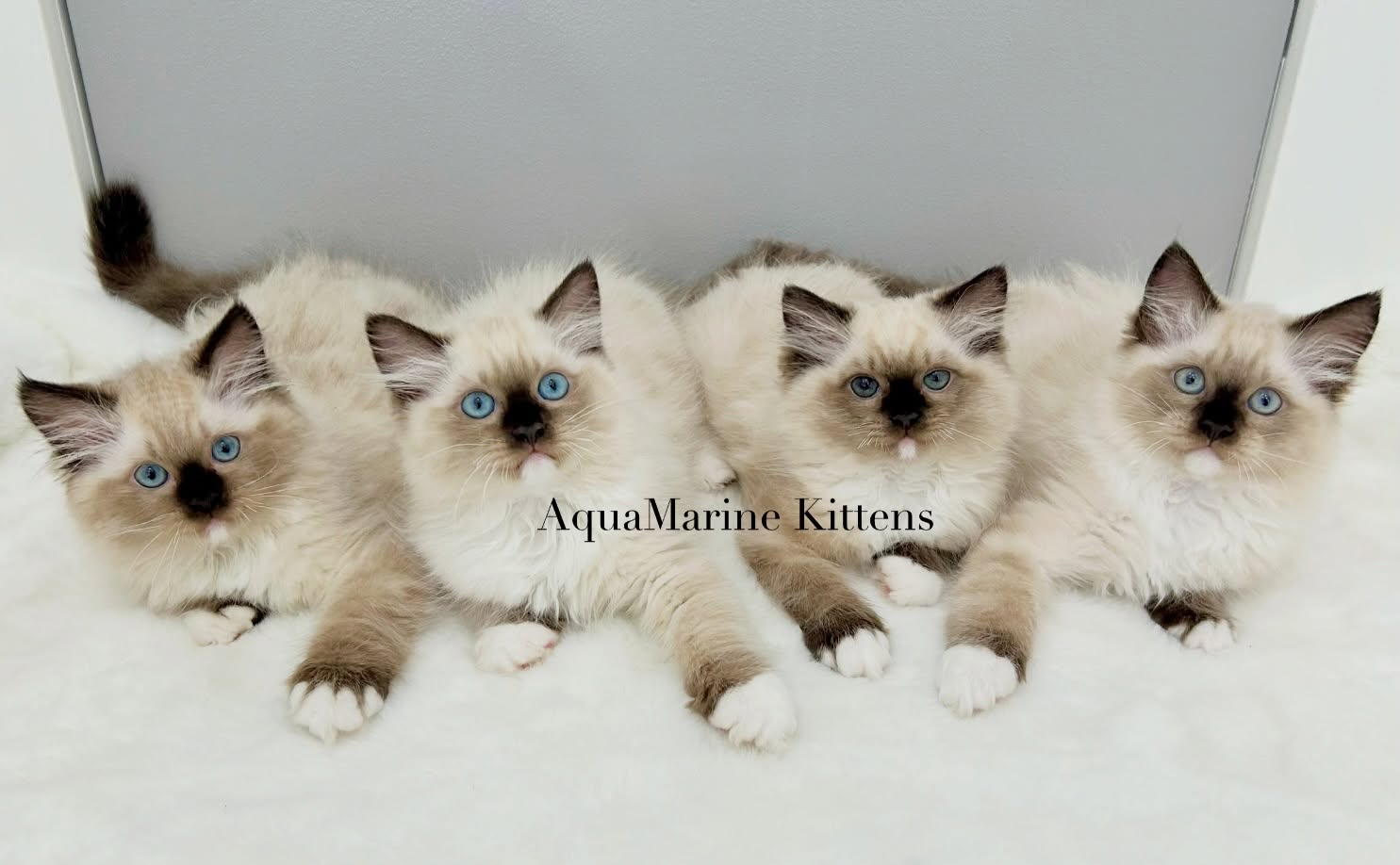
Table of Contents
What Is a Seal Mitted Ragdoll?
If you’ve ever googled “Ragdoll cat” and fallen in love with what you saw, there’s a good chance you were looking at a Seal Mitted Ragdoll. It’s one of the most recognized color and pattern combinations in the breed — and one of the most searched.
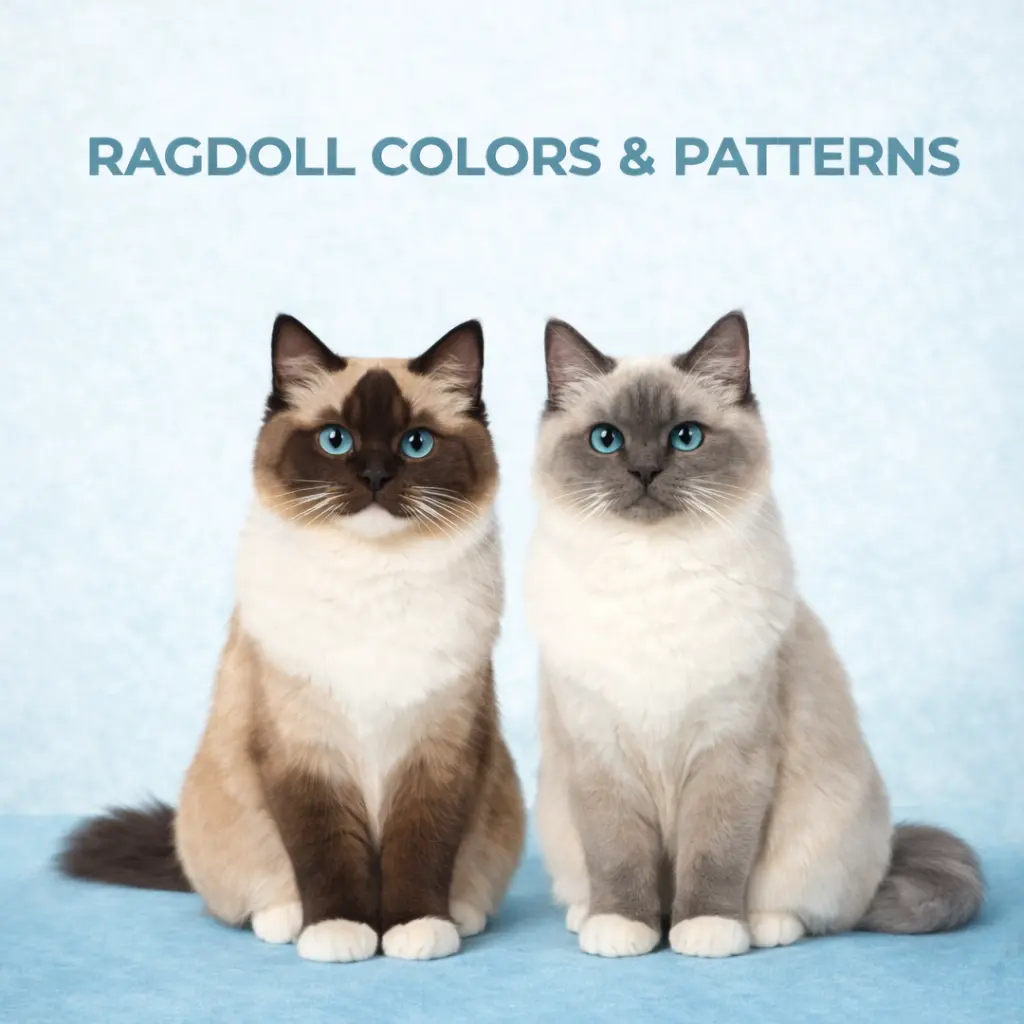
Breaking down the name tells you everything: Seal is the color — a deep, warm chocolate-brown on the points (ears, face, legs, and tail). Mitted is the pattern — white paws, a white chin, and a white belly stripe that runs from the chin to the base of the tail. Put them together and you get a cat with dramatic dark-and-light contrast, a soft cream body, and those unmistakable white mittens.
The Seal Mitted Ragdoll is a traditional color and pattern — recognized by TICA (The International Cat Association) as part of the standard Ragdoll breed. It’s not rare, but it is consistently one of the most requested patterns because the contrast between the dark points and the white mittens is genuinely striking.
Color, Points, and What Makes This Pattern Unique
The word “seal” in cat genetics refers to a very specific color — a deep, warm brown that sits at the dark end of the pointed color spectrum. On a Seal Mitted Ragdoll, this color shows up on the ears, face (the mask), legs, and tail. The body itself is cream to off-white, which creates that beautiful contrast.
What a lot of people don’t realize until they’ve actually spent time with a few litters is that not all Seal Mitted Ragdolls are the same shade. Some come in noticeably darker and richer — almost a deep espresso brown on the points. Others are a warmer, slightly lighter seal. It’s still the same color classification, but individual genetics mean there’s real variation in depth and saturation, even within a single litter from the same parents.
The mitted markings are part of what makes this pattern so distinctive. The white front paws — the “mittens” — are the signature look, but there’s also a white chin, a white belly stripe running from the chin down to the base of the tail, and sometimes a white blaze on the nose. The blaze isn’t required by the breed standard but shows up in some lines.
- White front paws — the “mittens” that give the pattern its name. They should be evenly white on both paws, ideally matching.
- White chin — a clean white under the chin that blends into the belly stripe.
- White belly stripe — runs from the chin to the base of the tail. Width can vary — some cats have a narrow stripe, others have a broader one.
- White hind legs — the back legs are also white, often to about mid-leg or higher. This differs from the bicolor pattern where the white extends further up.
- Optional blaze — a white marking on the nose between the eyes. Not required for breed standard but appears in some lines and is considered desirable in show cats.
Eye Color — and Why It Varies More Than People Expect
Blue eyes are non-negotiable for the traditional Seal Point Mitted Ragdoll. The TICA breed standard requires blue eyes for pointed Ragdolls — it’s one of the defining traits of the traditional color division and what sets them apart from the Mink and Sepia Cherubim cats.
But here’s what most articles don’t tell you: “blue” covers a pretty wide range. I’ve seen Seal Mitted kittens from the same litter where one kitten’s eyes developed into a pale, almost silvery blue and another’s were a vivid, deep sapphire. Both are blue. Both are correct. But the depth and intensity of the color is noticeably different when you put them side by side.
The intensity tends to become more defined as kittens mature — the eyes often deepen and clarify between 8 and 16 weeks. If you’re looking for a particular shade of blue, it’s worth asking your breeder what the parent cats’ eyes look like, since there’s definitely a genetic component to how vivid the blue comes in.
Color Development: Born White, Stays Beautiful
This is one of the most common things people are surprised by when they get a Ragdoll kitten — traditional Ragdolls are born completely white. No seal color, no visible mittens. Just a fluffy white newborn that you’d never guess would grow up to have dark points.
The color starts coming in within the first week or two. By 8 to 10 weeks the points are visible enough to see clearly, and the mitted markings — the white paws, chin, and belly stripe — become well-defined. But the seal color doesn’t fully settle into its adult depth until around 2 years of age. The darkening happens gradually, and how dark they ultimately get depends on the individual cat’s genetics.
- Birth to 1 week: Completely white. The mitted pattern and seal points are not yet visible.
- 1–3 weeks: Very faint shading begins appearing on the ears and face. Barely visible but the beginning of the points.
- 4–8 weeks: Seal color becomes clearly visible on points. Mitted markings are well-defined. Eye color shifts from newborn gray-blue toward their adult blue tone.
- 3–6 months: Color continues to deepen noticeably. The contrast between the seal points and the cream body becomes more striking.
- 1–2 years: Full adult color depth. Some darkening continues even beyond a year. Cold climates can intensify point color due to temperature-sensitive pigmentation.
One thing worth knowing: Ragdoll point color is temperature-sensitive, the same way Siamese color is. The points develop on the cooler parts of the body — extremities — and cats living in cooler climates or households tend to develop richer, darker points than cats in warmer environments. It won’t change the pattern, but it can affect how deep the seal color looks at full maturity.
Mitted vs. Bicolor — What’s the Difference?
People ask me this all the time, especially people who are new to Ragdolls and seeing both patterns for the first time. Both have seal points. Both are beautiful. But the white markings are completely different and the overall look is quite distinct.
| Feature | Seal Mitted | Seal Bicolor |
|---|---|---|
| White on face | White chin only | Bold inverted V covering much of the face |
| White on front paws | White “mittens” on paws | White legs from paws up |
| White on belly | Narrow belly stripe from chin to tail | Broader white underbelly |
| Hind legs | White to mid-leg | White higher up the leg |
| Overall impression | Subtle, balanced, classic | Bold, dramatic, high-contrast |
| White overall | Less white | More white |
| Eye color | Blue | Blue |
The Mitted is the more refined, classic look. The Bicolor is bolder and higher-contrast. Which one appeals to you is really a personal preference — I love both, and I’ve seen people fall completely in love with each pattern for different reasons.
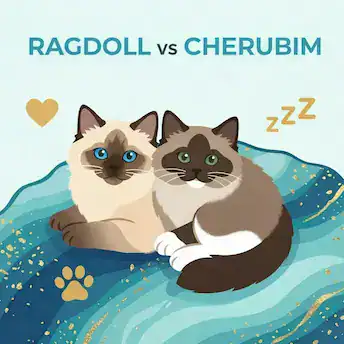
Seal Mitted vs. Seal Mink Mitted Cherubim
This one is worth its own section because it comes up a lot — and because we breed both at AquaMarine Kittens, I can give you a real firsthand comparison rather than a textbook answer.
The pattern is the same: white paws, white chin, white belly stripe. What changes is everything underneath that, at the genetic level. The Seal Mink Mitted Cherubim carries the Mink gene — and that gene does three things differently from the traditional Ragdoll.
| Feature | Seal Mitted Ragdoll | Seal Mink Mitted Cherubim |
|---|---|---|
| Born | White — color develops over weeks | Fully colored from birth |
| Eye color | Blue | Aqua or green |
| Coat texture | Silky, flowing | Plush, dense, velvety |
| Color depth at birth | None visible | Full color immediately |
| TICA classification | Ragdoll (traditional) | Cherubim (Ragdoll Breed Group) |
| Personality | Calm, affectionate, gentle | Calm, affectionate, gentle |
The temperament is essentially the same — both are the calm, people-oriented, go-limp-when-you-pick-them-up cats that made the breed famous. If you want to go deeper on the Cherubim side, I’ve written full guides on both the Seal Mink Mitted Cherubim and the Blue Mink Mitted Cherubim. And if you want to see how the Bicolor pattern plays out in a Mink cat, the Seal Mink Bicolor Cherubim post covers that in full.
A Note From Our Cattery
People sometimes come to us wanting a traditional Seal Mitted Ragdoll and end up falling in love with a Seal Mink Mitted Cherubim after seeing them side by side — or vice versa. If you’re unsure which direction you want to go, reach out and I’ll walk you through the differences in person. It’s genuinely easier to see than to read about.
Personality and Temperament
This is the part that makes Ragdolls different from almost every other breed I know of. The color and pattern draw you in — but it’s the personality that keeps every single person who has ever owned one completely devoted to the breed for life.
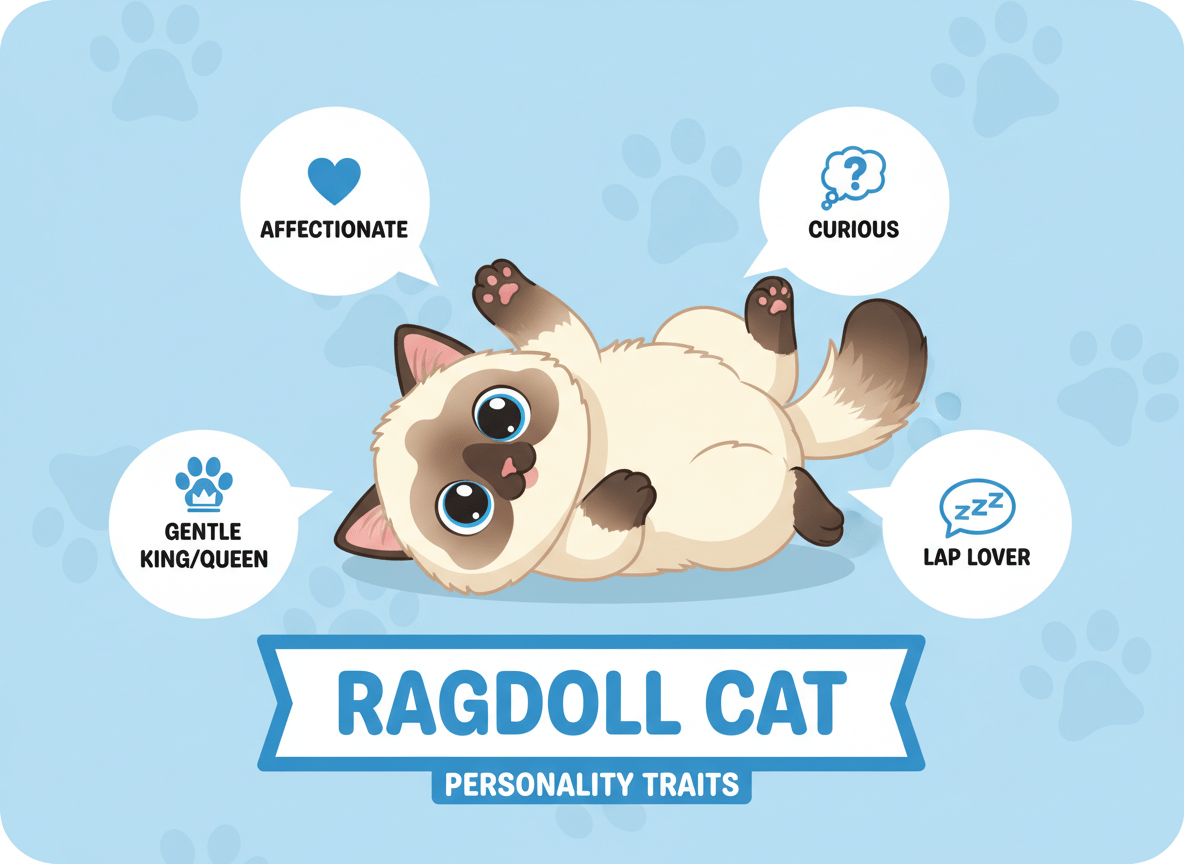
Seal Mitted Ragdolls — like all Ragdolls — are genuinely calm. Not lazy, not aloof, not just tolerant. Calm in a way that feels intentional. They don’t startle easily. They don’t bolt out of the room when something new happens. They check it out, decide it’s fine, and go back to what they were doing. That steadiness is one of the things I love most about this breed.
- They follow you everywhere. The “puppy-cat” description gets used a lot with Ragdolls and it’s accurate. They will trail you from room to room, sit outside the bathroom door, and position themselves wherever you are in the house.
- They go limp when you hold them. This is the famous Ragdoll trait — they genuinely relax in your arms in a way that other cats don’t. It’s part of what makes them so easy to handle and so good with children.
- They’re not demanding. They want to be near you, but they’re not vocal or pushy about it. They’ll wait patiently and won’t yell at you for attention.
- They’re great with kids and other pets. The combination of calm temperament and gentle nature makes them ideal family cats. They’re patient in a way that a lot of breeds aren’t.
- They stay playful. Adult Ragdolls still enjoy interactive toys, wand toys, and games. They don’t turn into couch fixtures — they stay engaged and curious.
- They need company. Because they’re so people-oriented, they don’t do well being left alone for very long stretches. If you work long hours, consider getting two so they have each other.
Size and Growth
Ragdolls are one of the largest domestic cat breeds, and the Seal Mitted Ragdoll is no exception. Males typically reach 15 to 20 pounds at full maturity. Females are usually 10 to 15 pounds. But what makes them different from just being big cats is how long it takes to get there.
Ragdolls don’t reach full size until they’re 3 to 4 years old. That’s a long time for a cat. It means you get an extended kittenhood — they stay playful, bouncy, and curious for years while slowly growing into that large, calm, majestic adult cat. It’s genuinely one of my favorite things about the breed.
Care, Grooming, and Diet
One of the things I always tell people is that Ragdolls are not as high-maintenance as their coat might suggest. The semi-longhaired coat is silky and doesn’t mat the way some long-haired breeds do, but it does need regular brushing to look its best and prevent tangles.
- Brushing: Two to three times per week is usually enough to keep the coat healthy and tangle-free. During shedding season — typically spring and fall — more frequent brushing makes a real difference. A slicker brush or a wide-tooth comb works well.
- Diet: All of our kittens go home raw-fed. A high-quality diet — raw or premium wet food — makes a visible difference in coat quality, energy, and digestion. You can read more about how and why I feed raw in my raw feeding guide.
- Enrichment: Cat trees, window perches, wand toys, and interactive feeders. Ragdolls are curious and playful — they need things to explore, especially when they’re young.
- Vet care: Regular wellness visits, vaccinations, and HCM screening. All of our breeding cats are health-tested and all kittens go home with a health guarantee.
- Indoor only: Ragdolls are not street-smart cats. Their calm, trusting nature makes them vulnerable outdoors. They should be kept inside or given a safe enclosed outdoor space.
A word on health: Ragdolls can be predisposed to HCM (hypertrophic cardiomyopathy), which is why health testing in the breeding program matters so much. When you’re looking for a Seal Mitted Ragdoll kitten, always ask about the parents’ cardiac screening history. A reputable breeder will have this documentation readily available.
Our Seal Mitted Ragdolls at AquaMarine Kittens
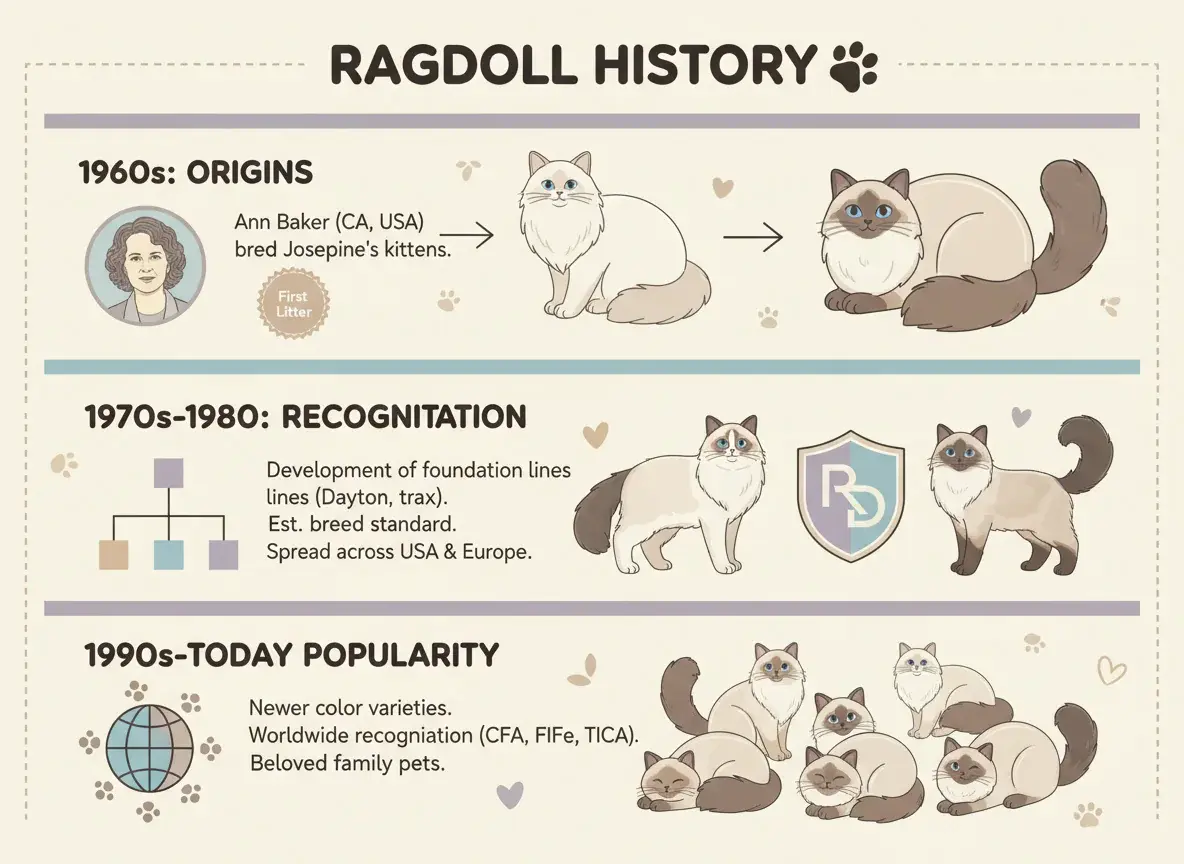
We raise both traditional Seal Mitted Ragdolls and Mink Cherubim cats here in Virginia, and I love having both in the program because it gives me — and the families who come to us — a real comparison. The seal mitted pattern is one I’ve worked with from the beginning, and it never gets old watching those white newborns slowly reveal their points over the first weeks of life.
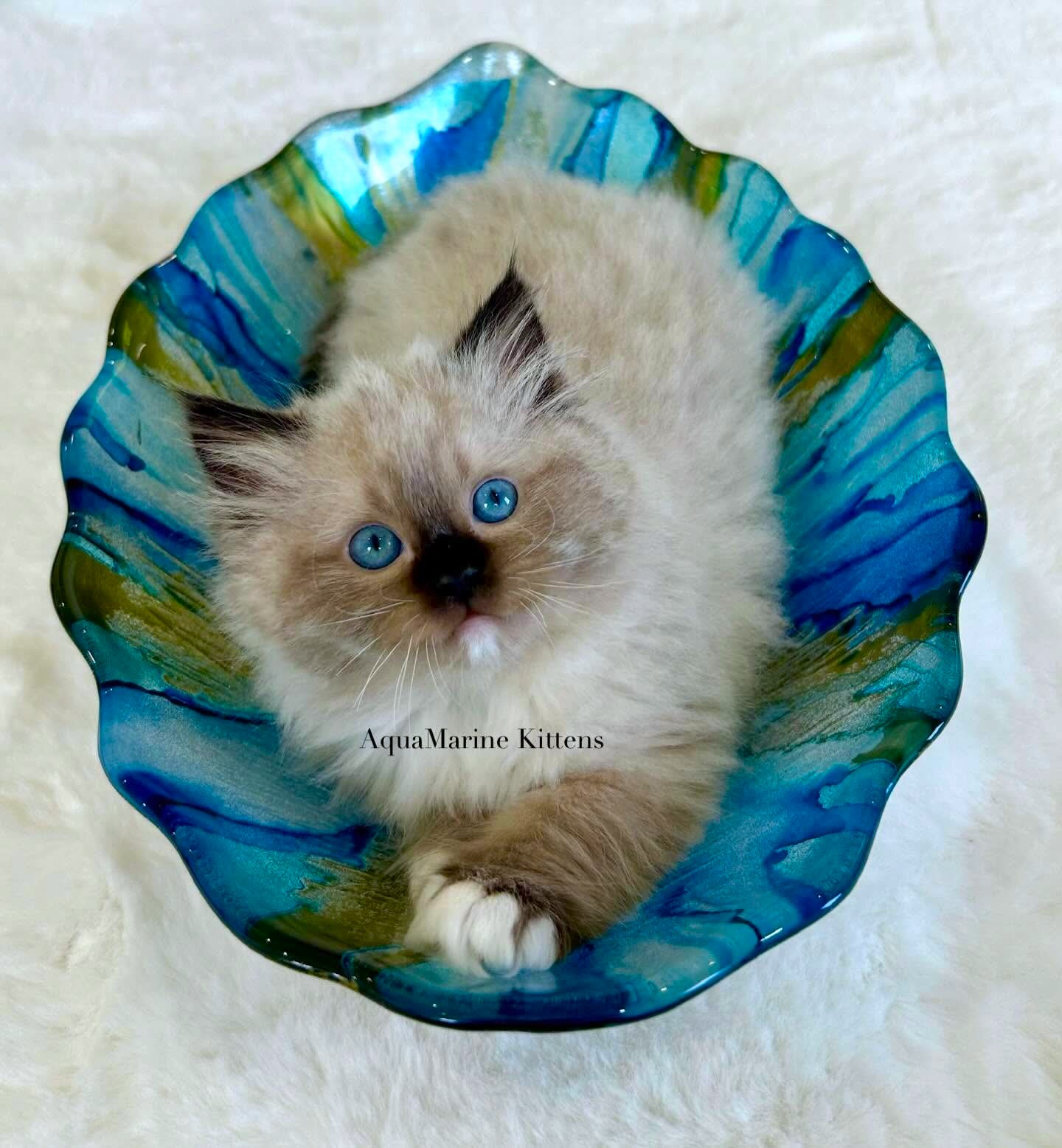
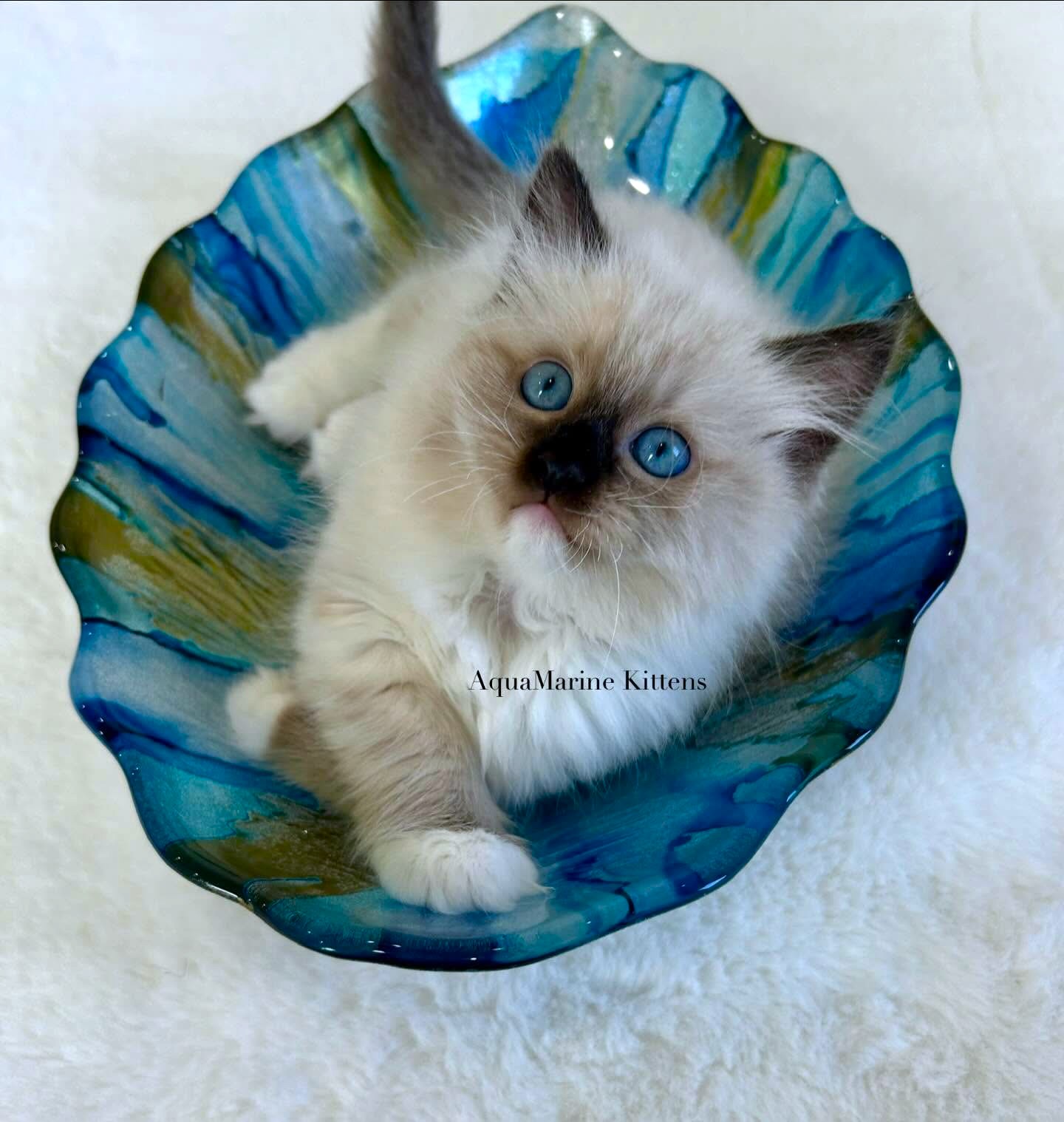
Ruby and Pearl show exactly what I was talking about earlier — siblings from the same litter, same parents, and you can already see the difference in how their seal color is developing. One is coming in a bit richer, one a bit lighter. Both are correct, both are beautiful, and both will continue darkening over the next year or two as they mature.
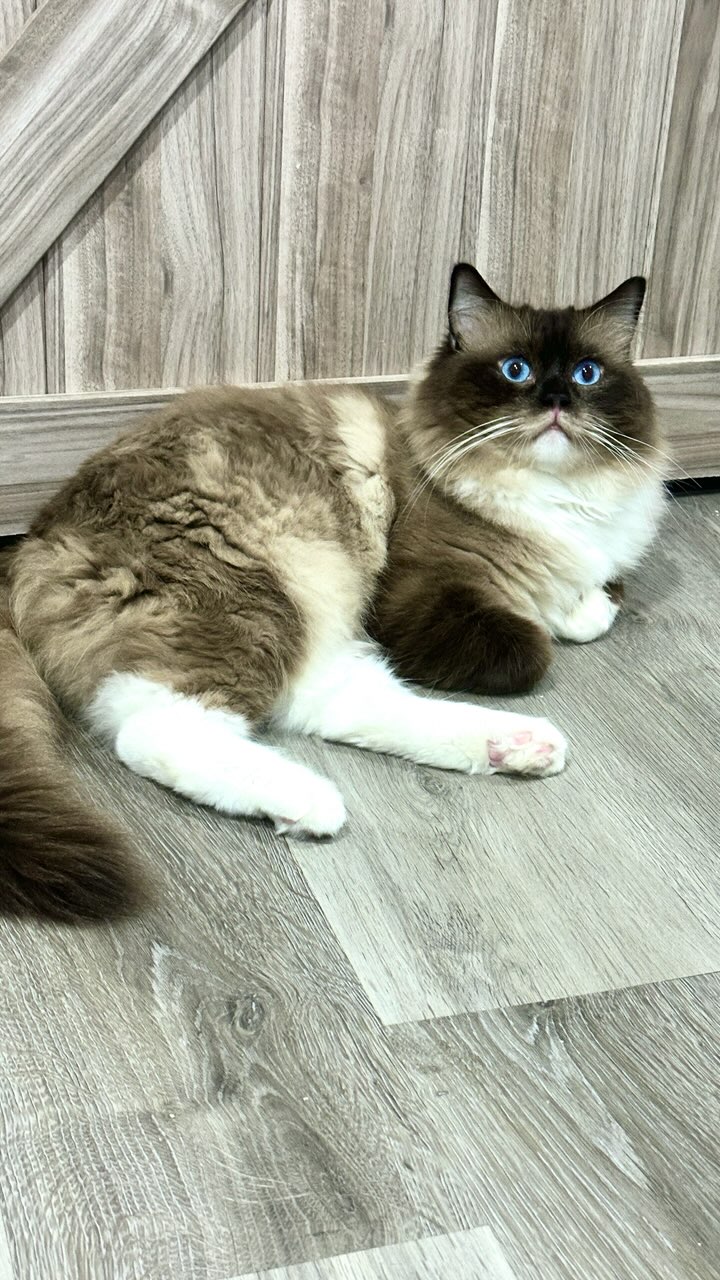
Teddy is a good example of what the seal color looks like at full adult maturity — rich, warm, and deep. The points have settled into that classic chocolate-espresso tone that makes the Seal Mitted Ragdoll so visually striking. And those blue eyes against that dark coat? That contrast never gets boring.
Frequently Asked Questions About the Seal Mitted Ragdoll
Final Thoughts
The Seal Point Mitted Ragdoll is a classic for a reason. That combination of deep seal points, clean white mittens, and vivid blue eyes is genuinely timeless — and the personality underneath it all is everything the breed is known for. Calm, affectionate, loyal, and endlessly good with families.
If you’re considering a Seal Mitted Ragdoll cat and want to learn how they compare to our Mink Cherubim cats, or if you just have questions about what to look for in a breeder, I’m always happy to talk. Every kitten we raise is raw-fed, TICA-registered, and health-tested — and every family matters to us well past the day they take their kitten home.
Looking for a Seal Mitted Ragdoll Kitten?
Raw-fed, TICA-registered, health-tested, and raised in our Virginia home from birth. See what’s available or get in touch about upcoming litters.
View Available Kittens