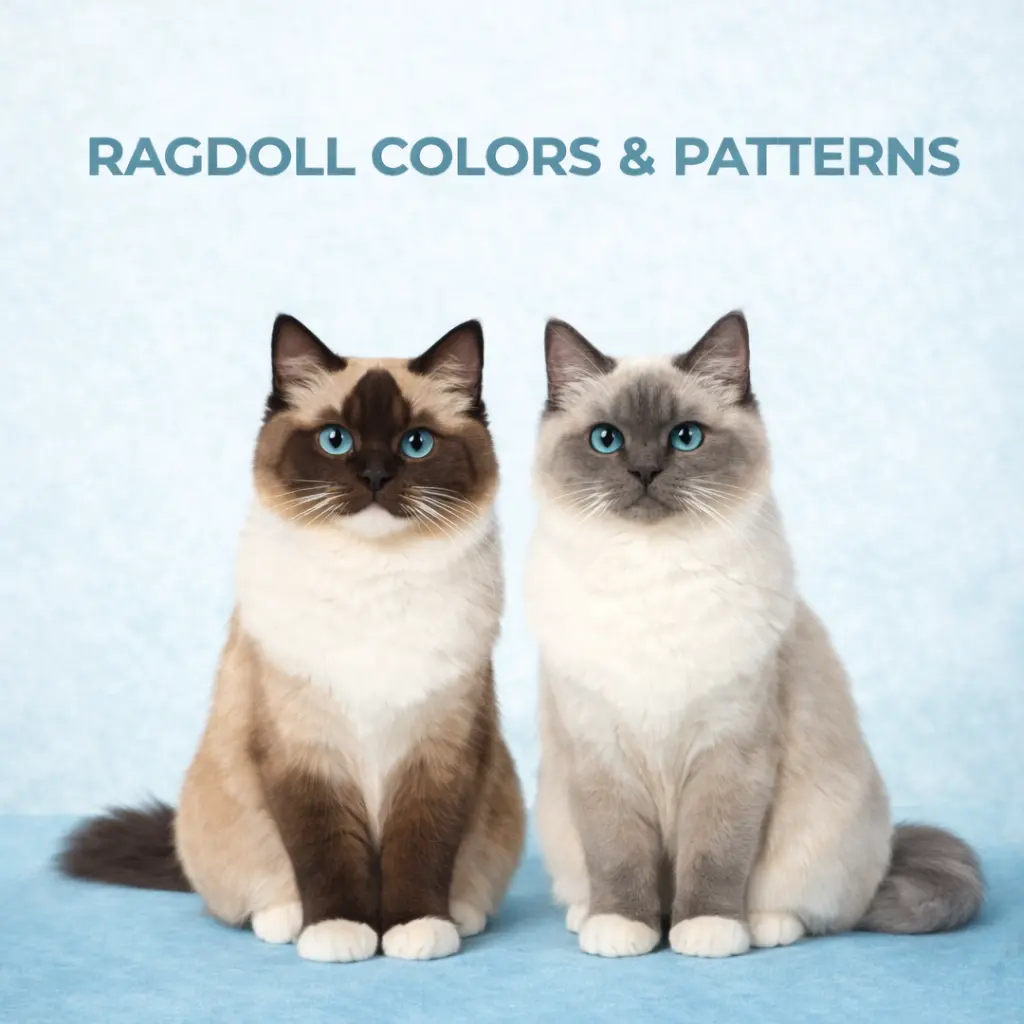
The Seal Bicolor Ragdoll is a traditional Ragdoll with dark brown seal points on the ears, back legs, and tail — and a white inverted V marking that covers most of the face. I’ve raised quite a few of them over the years and they’re consistently one of the patterns people ask me about the most, so I wanted to put together an honest guide with real photos from our program.
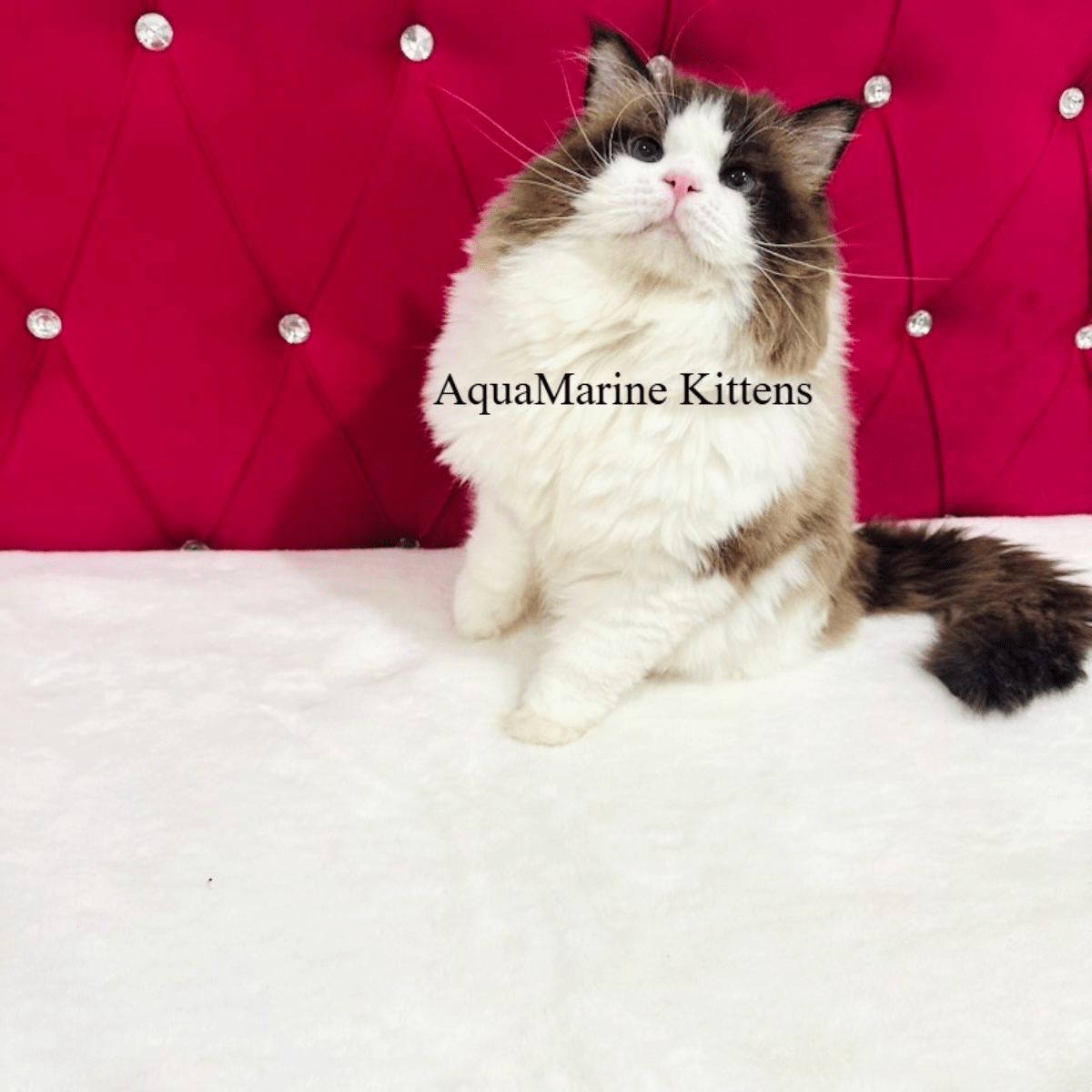
Table of Contents
What Is a Seal Bicolor Ragdoll?
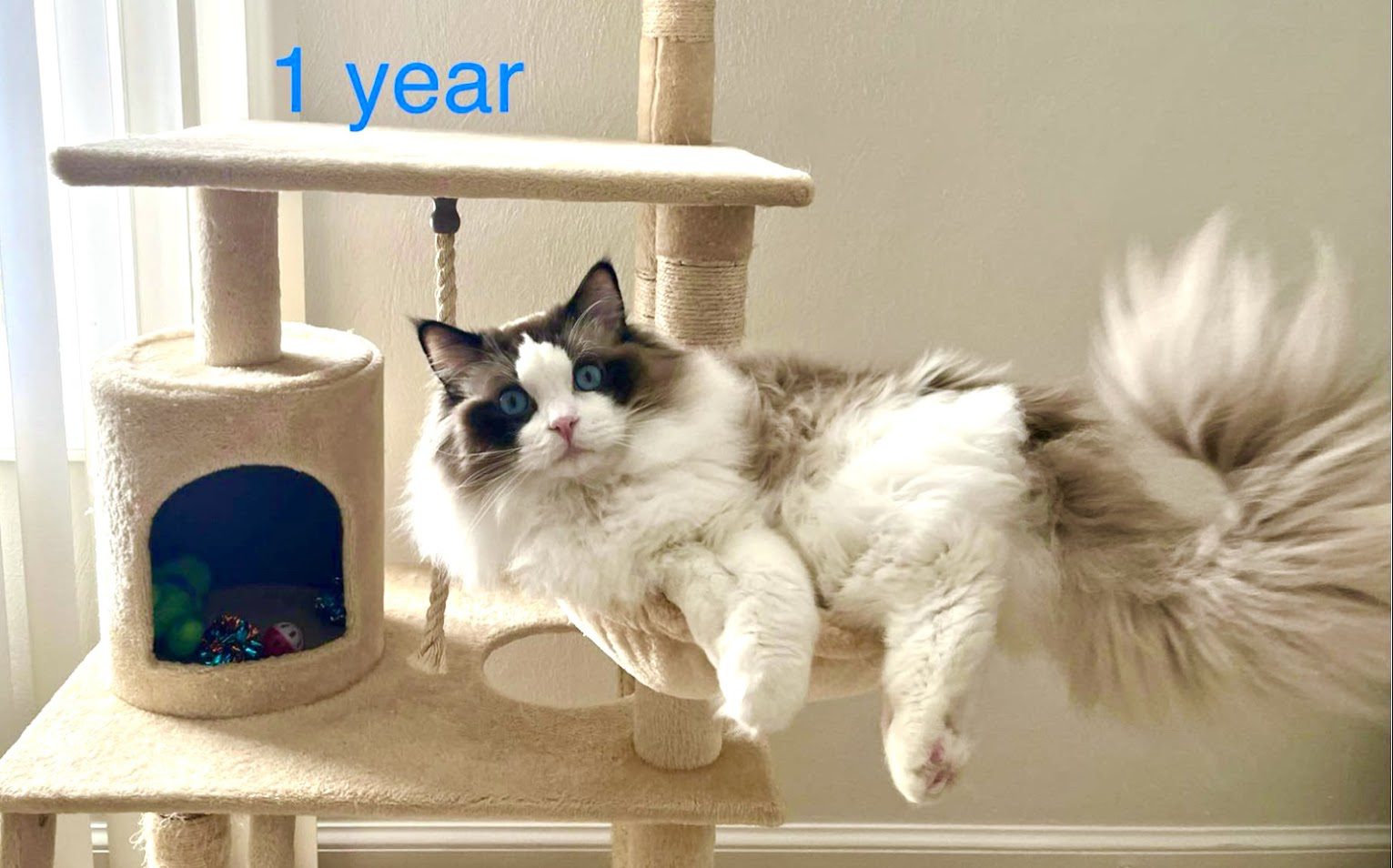
A Seal Bicolor Ragdoll has dark brown seal-colored points on the outer ears, the back legs, and the tail — combined with a white inverted V marking on the face, white legs, and a broad white underbelly. The body is cream or off-white. The eyes are always blue.
It’s a high-contrast pattern because the seal color is the darkest in the traditional Ragdoll palette, and the Bicolor is the pattern with the most white. So there’s a clear difference between the colored and white areas, especially on the face where the V sits right in the middle of the dark points.
Seal Bicolor Ragdolls — also called Seal Point Bicolor Ragdolls or Bicolor Seal Point Ragdoll cats — are fully recognized by TICA (The International Cat Association) under the traditional Ragdoll breed standard.
The Inverted V — The Bicolor Face Marking
The inverted V is what makes a Bicolor Ragdoll immediately recognizable. It’s a white marking that starts between the eyes, comes down the bridge of the nose, and fans out across the cheeks. On a well-marked Seal Bicolor it’s clean and symmetrical, with the dark seal color on the outer ears framing it on either side.

Not every Bicolor has a perfectly centered or clean V — in any litter you’ll see some variation in how symmetrical and defined it is. Cats with uneven or off-center markings are called mismarked. They make just as good pets; the marking just doesn’t score well in a show ring.
- White inverted V on the face — runs from between the eyes down the nose and fans outward. Clean and symmetrical on a well-marked cat.
- White legs — front and back legs are white from the paws up, generally reaching the body. More white than the Mitted’s paw-only markings.
- Broad white underbelly — wider than the Mitted belly stripe. Higher overall white coverage.
- Seal points on outer ears, back legs, and tail — the dark color sits on the parts of the body the white doesn’t cover.
- Pink nose leather — sits inside the white V, which gives the face that open, light expression this pattern is known for.
The Seal Color and How It Varies
Seal is the darkest traditional Ragdoll color — a dark warm brown on the points. On a Bicolor cat, this color sits mainly on the outer ears, the back legs, and the tail, which means most of what you see is the contrast between those dark areas and the white.
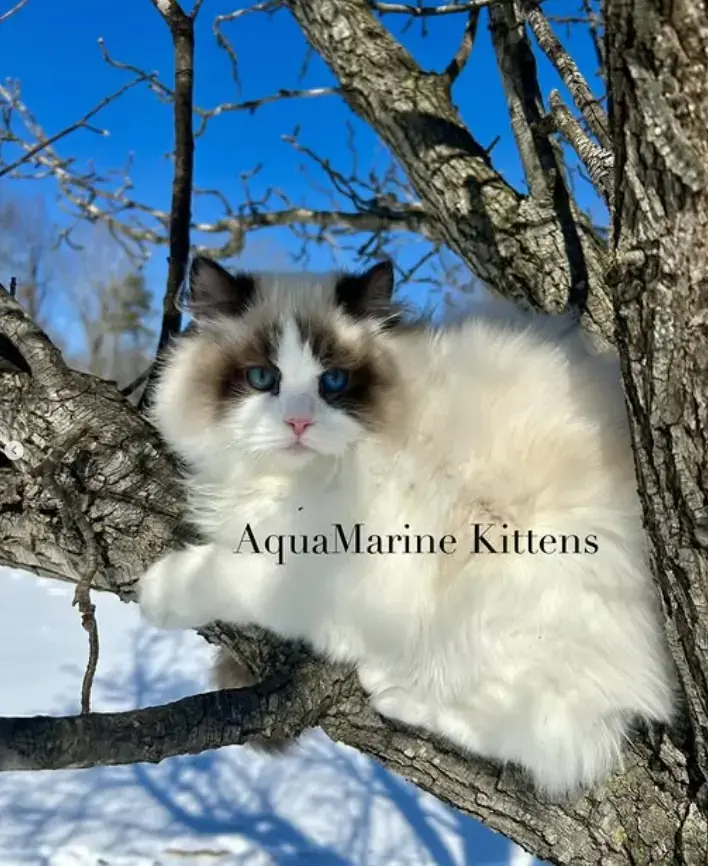
Not every Seal Bicolor comes in exactly the same shade. Some develop a noticeably darker brown on the points. Others stay on the lighter, warmer side. It’s the same color classification — just individual variation from genetics. You can sometimes see this clearly between siblings from the same litter.
The seal color is also temperature-sensitive, the same way Siamese pointing works. The points develop on the cooler parts of the body, and cats in cooler environments tend to develop darker points than cats in warmer homes. It doesn’t change the pattern, just the depth of the color over time.
Born White: How the Seal Bicolor Ragdoll Pattern Comes In
Every traditional Ragdoll is born completely white. The seal color and the inverted V pattern aren’t visible at birth — they come in gradually over the first weeks, and the full depth of the color isn’t reached until around 2 years of age.

- Birth: Completely white. No color, no visible pattern.
- 1–2 weeks: Very faint seal color at the ear tips. Easy to miss.
- 3–5 weeks: Seal color clear on the ears. The inverted V starts forming on the face. Back legs and tail begin showing color.
- 8–12 weeks: Full pattern visible. Inverted V well-defined, white legs and belly clear, seal points on ears and tail developing. Eyes shifting toward adult blue.
- 1–2 years: Full adult color depth. Seal continues to deepen and the contrast between dark points and white areas becomes more defined.
Eye Color in Seal Bicolor Ragdolls
Blue eyes are required for all traditional pointed Ragdolls under the TICA breed standard. A Seal Bicolor Ragdoll cat will always have blue eyes. If you’re seeing aqua or green eyes on a cat described as a Seal Bicolor, that’s a Mink Cherubim, not a traditional Ragdoll.
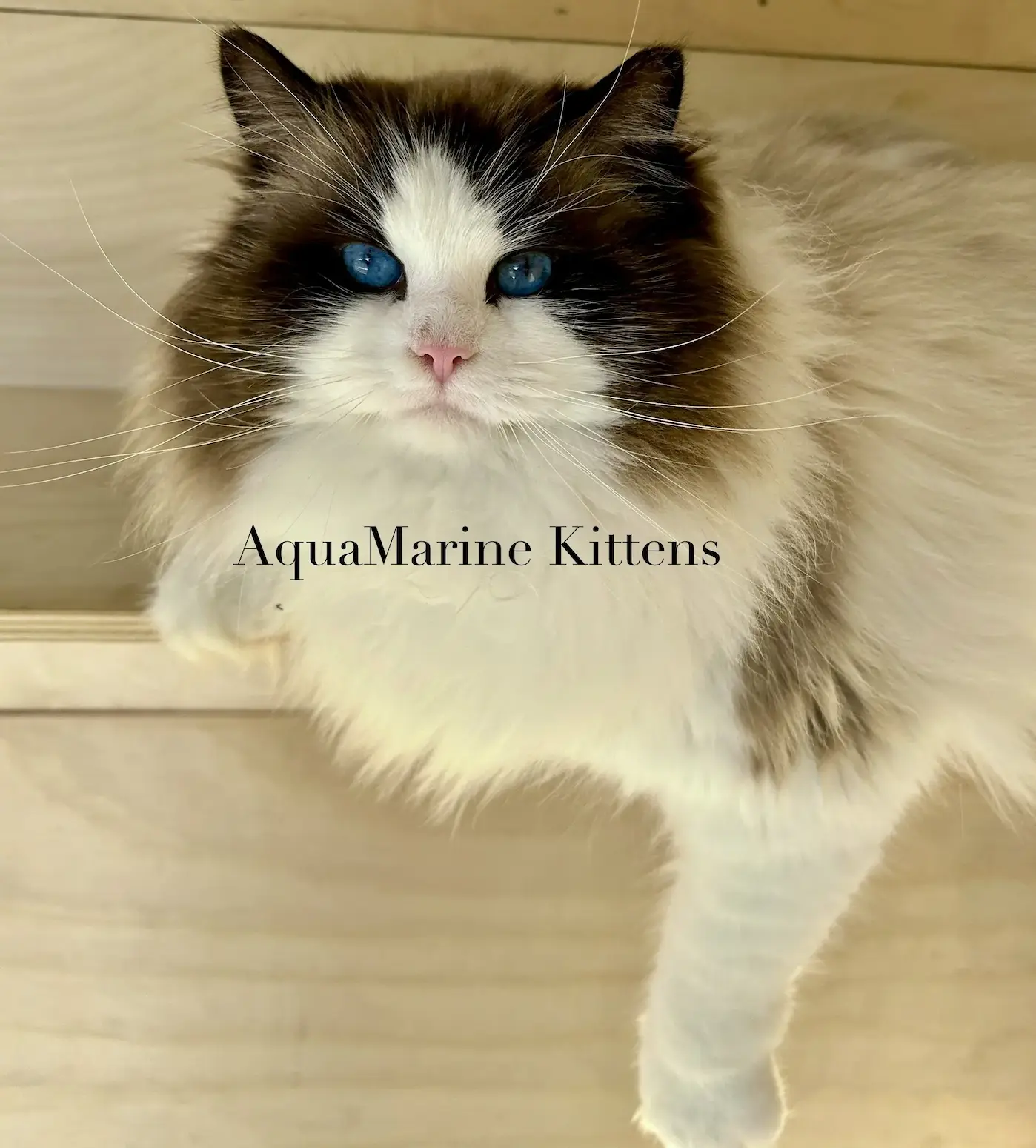
The shade of blue varies — some cats have lighter, almost gray-blue eyes and others are a deeper blue. Both are correct and both appear in well-bred lines. In my experience eye intensity has a genetic component, so asking to see the parents is a reasonable thing to do when choosing a kitten.
Seal Bicolor vs. Seal Mitted Ragdoll
Both are seal-pointed cats but the white markings are completely different. People often ask which one they should get, and the honest answer is it comes down to which pattern appeals to you more.
| Feature | Seal Bicolor Ragdoll | Seal Mitted Ragdoll |
|---|---|---|
| White on face | Bold inverted V covering most of the face | White chin only |
| White on front legs | White from paws up to the body | White paws only |
| White on belly | Broad white underbelly | Narrow belly stripe |
| Overall white coverage | More white overall | Less white overall |
| Overall look | High contrast, bold face marking | More balanced, classic pattern |
| Eye color | Blue | Blue |
I breed both and love both. You can read the full guide on the Seal Mitted Ragdoll here if you want to compare them side by side.
Seal Bicolor Ragdoll vs. Seal Mink Bicolor Cherubim
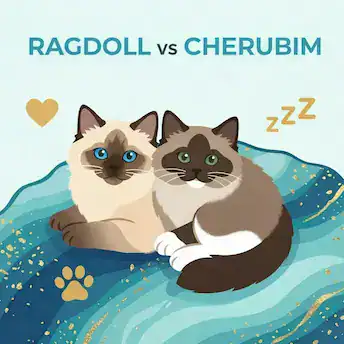
We breed both at AquaMarine Kittens, so I can give you a firsthand comparison. The Bicolor pattern is the same in both — white inverted V, white legs, white belly. The genetics are different and those genetics change three things.
| Feature | Seal Bicolor Ragdoll | Seal Mink Bicolor Cherubim |
|---|---|---|
| Born | White — color develops over weeks | Full dark color visible from birth |
| Eye color | Blue | Aqua or green |
| Coat texture | Silky, flowing semi-longhair | Denser and plushier |
| Bicolor pattern | Inverted V, white legs, white belly | Same pattern |
| TICA classification | Ragdoll (traditional) | Cherubim (Ragdoll Breed Group) |
| Personality | Calm, affectionate, gentle | Calm, affectionate, gentle |
The personality is the same across both. For the full Cherubim side of things, the Seal Mink Bicolor Cherubim guide goes into detail. The Ragdoll vs Cherubim comparison is also helpful if you’re deciding between the two.
Personality and Temperament
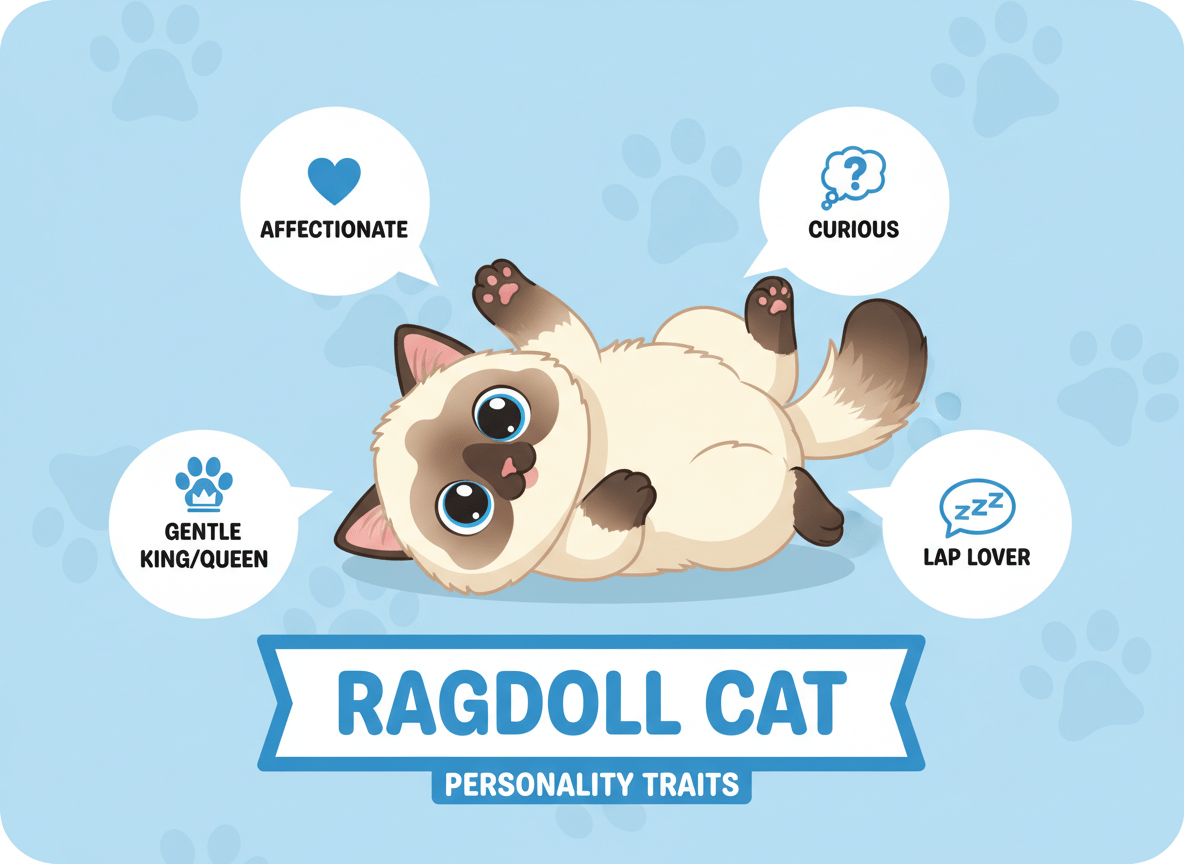
The color and pattern don’t change the temperament — a Seal Bicolor Ragdoll has the same personality as any other Ragdoll. They’re calm, people-oriented, and affectionate without being needy.
They follow you around the house, go relaxed when you pick them up, and are patient with kids and other pets. Napoleon — our retired king — is a good example. Big cat, calm about everything, happy to sit near whoever is in the room. That’s just how Ragdolls are.
- They follow you room to room. They want to be near you — not necessarily in your lap, but always somewhere close.
- They go relaxed when held. The Ragdoll flop is real. They relax into your arms in a way most cats don’t, which makes them easy to handle and good with children.
- They’re not vocal or demanding. They want your time but they don’t push for it. Quiet, settled cats.
- They stay playful as adults. They’re not couch cats. They play, explore, and stay curious well into adulthood.
- They need company. Don’t leave a Ragdoll alone for long periods regularly. If you work long hours, having two makes a real difference.
Grooming and Care
The Seal Bicolor Ragdoll has a semi-longhaired coat that doesn’t mat as badly as some long-haired breeds, but it does need regular brushing. On the white areas, any dullness in the coat shows up clearly, so diet and grooming routine matter.
- Brush two to three times a week. More during shedding season. A slicker brush or wide-tooth comb works well. Pay attention behind the ears and under the armpits where tangles start.
- Feed a quality diet. All our kittens go home raw-fed and the coat difference is noticeable. More in my raw feeding guide.
- Keep them indoors. Ragdolls are too trusting for outdoor life. Keep them inside or in a safely enclosed space.
- Regular vet visits and cardiac screening. Ragdolls can be predisposed to HCM. Our breeding cats are all health-tested. Always ask about cardiac screening when choosing a breeder.
Our Seal Bicolor Ragdolls
Here’s a look at some of the Seal Bicolor Ragdoll cats and kittens we’ve raised at AquaMarine Kittens — across different ages so you can see how the pattern and color develop over time.

Kahlua and Bryan are a good example of what I mentioned about color variation. Same parents, same litter — and you can already see the difference in how the seal tone is coming in on their ears. Neither is wrong, it’s just how genetics work.
From Our Cattery — AquaMarine Kittens
Napoleon was our retired king and the cat that first got me really invested in the Seal Bicolor pattern. Masha is our upcoming queen who will carry this pattern forward. And cats like Kahlua, Bryan, Po, and Aslan are the ones that have come through the program and gone to families who still send me updates — which is always the best part.
Videos
These videos are not from our current kittens but give you a good idea of what Seal Bicolor Ragdolls look and act like in a home environment — the coat, the temperament, and how they carry themselves as adults.
Note: the cats in these videos are not from AquaMarine Kittens — included as a general reference for the pattern and temperament.
Frequently Asked Questions About Seal Bicolor Ragdolls
Final Thoughts
The Seal Bicolor Ragdoll is a well-known traditional Ragdoll pattern with a distinctive look — dark seal points on the ears and back legs, a white inverted V on the face, and blue eyes. If the pattern appeals to you, the temperament behind it is everything you’d expect from a Ragdoll: calm, people-oriented, and easy to live with.
If you have questions about our Seal Bicolor Ragdoll kittens or want to know what’s available, reach out anytime. All our kittens are raw-fed, TICA-registered, and health-tested here in Virginia.
Looking for a Seal Bicolor Ragdoll Kitten?
Raw-fed, TICA-registered, health-tested, and raised in our Virginia home from birth. See what’s available or reach out about upcoming litters.
View Available Kittens