I’ve been feeding my cats and kittens a raw food diet for almost three years now. I started with the help of a mentor who had been feeding raw for over twenty years — her guidance was invaluable — but I also encourage you to do your own research along the way. This is my real breeder’s guide to making homemade raw cat food in big batches, using the same method I use regularly for my cats. Please note: I am not a vet or a nutritionist. This is what works for me, and it should serve as a starting point for your own research, not a final prescription.
Why I Feed Raw — A Breeder’s Perspective
I didn’t set out to be a raw feeder. I started as a Ragdoll breeder and didn’t think much about diet beyond high-quality kibble. But once I saw what raw food did for my cats — cleaner coats, better stools, more energy, almost zero vet visits for digestive issues — I couldn’t go back.
I’ve been feeding raw for almost three years now. I had a wonderful mentor who had been doing it for over twenty years, and her guidance gave me the confidence to start. That said, I always encourage people to do their own research too. There’s a lot of great information out there, and what works for my cattery may need adjusting for yours. I’m sharing what works for me — not a one-size-fits-all prescription.
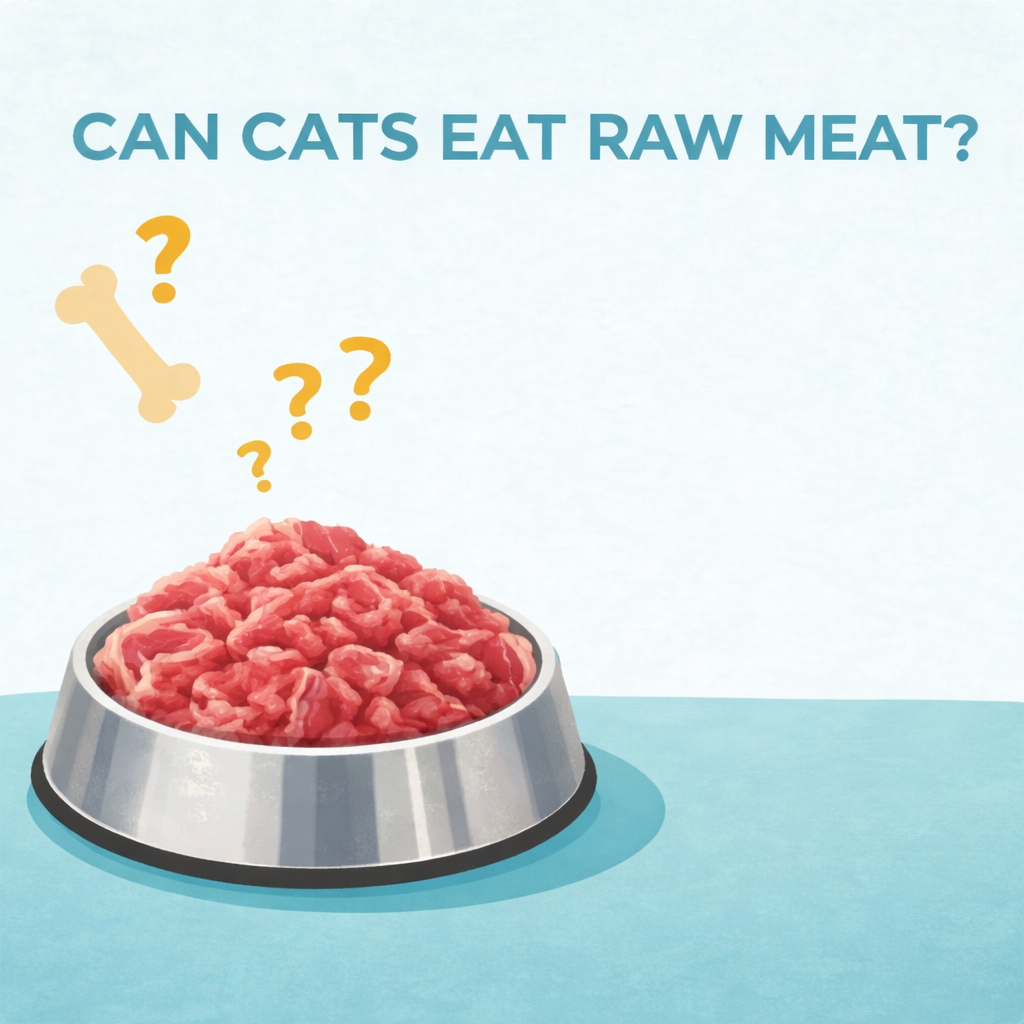
A raw food diet for cats mimics what they’re biologically built to eat. Cats are obligate carnivores — they don’t need grains, fillers, or carbohydrates. What they need is meat, organs, bone, fat, and a few key supplements to fill in what they’d get from eating whole prey. Once you understand that, making a raw food diet for your cats stops being intimidating and starts feeling obvious.
If you want a full breakdown of why I chose raw and what it’s done for my cats and kittens, check out my post: 7 Positive Reasons to Feed Cats Raw Meat.
What You Need Before You Start
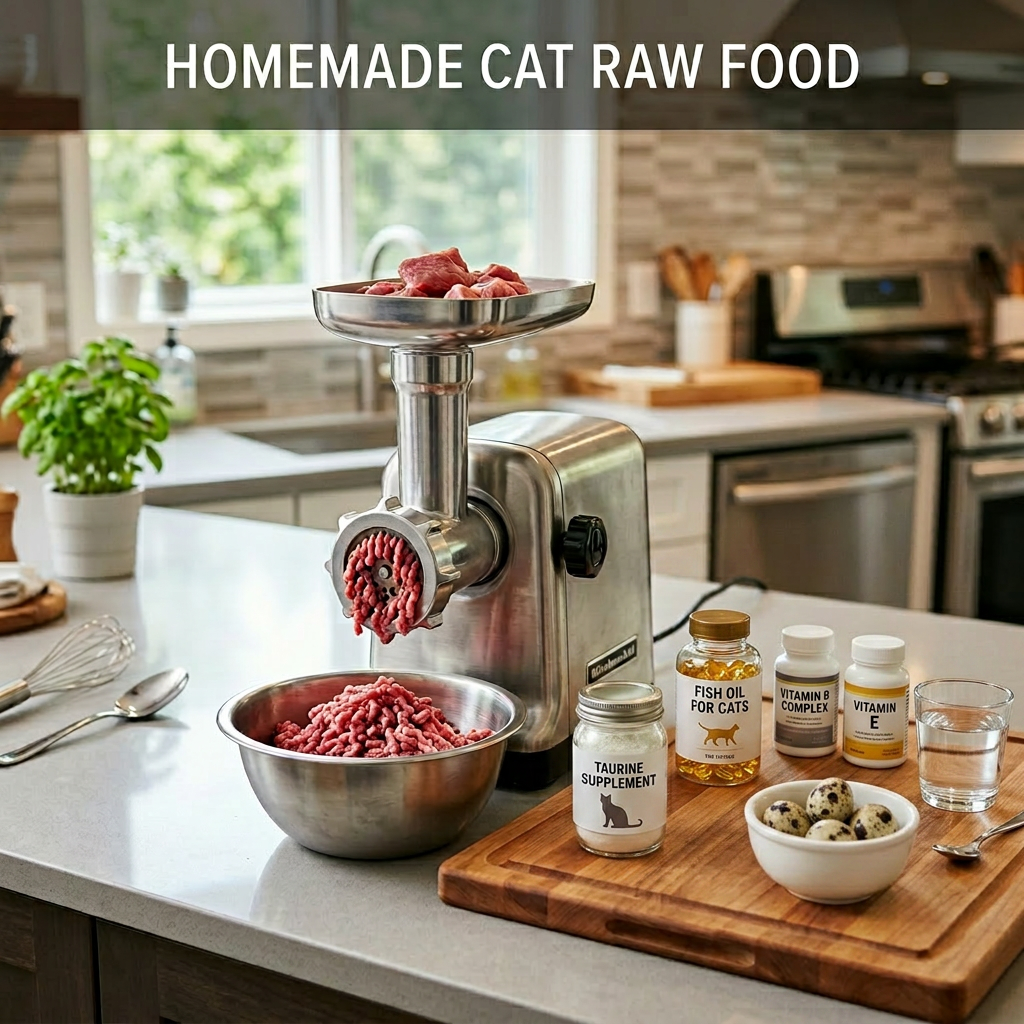
I make 60–80 lb batches at a time because I have multiple cats and we go through food fast. My setup isn’t fancy but it works. Here’s what I use:
- A grinder that handles bones. Don’t skimp here. Lower-end grinders jam on bones constantly. I use one powerful enough to handle chicken leg quarters without stopping every five minutes.
- Large bowls. For a big batch like mine, I use laundry basket-sized containers — regular kitchen mixing bowls overflow fast at 60–80 lbs. If you have fewer cats and are making smaller batches, standard large kitchen bowls work perfectly fine.
- A sharp knife and kitchen shears. For deboning and trimming.
- A kitchen scale. Get one that handles at least 10 lbs. I use it constantly, especially when I’m new to a batch size.
- Gloves. Keep multiple pairs handy — you’ll change them during the process.
- 32 oz plastic containers. I reuse these and they work so much better than Ziploc bags. Cleaner, easier to stack, and they last a long time.
- A cutting board big enough to fit in the dishwasher.
The Recipe I Use (Based on Feline Nutrition’s Formula)
The recipe I follow is based on Feline Nutrition’s Easy Homemade Cat Food Recipe from Hare Today. I don’t want to rewrite the whole thing here because they explain it beautifully, and they have a recipe calculator that does all the math for you based on how much meat you’re starting with — which is the tool I actually use every time.
👉 Use the Feline Nutrition Recipe Calculator here — just enter the weight of your meat (after deboning and skin removal) and it calculates everything else automatically.
That said, here’s a quick overview of what goes into it so you understand what you’re working with:
| Ingredient | Purpose | Notes |
|---|---|---|
| Chicken leg quarters (with bone) | Protein + calcium from bone | Remove ~20–25% of bone before grinding |
| Raw chicken liver | Essential organ nutrition | Keep it to 5–10 oz per 20 lbs of meat |
| Raw chicken heart | Primary taurine source | Sub with extra taurine supplement if unavailable |
| Raw egg yolks | Fat, vitamins, amino acids | I use eggs from our own chickens when possible |
| Water (spring) | Hydration, consistency | Use spring water — tap can have too many additives |
| Taurine (supplement) | Critical amino acid for heart health | Always needed — even more so without raw heart |
| Wild salmon / small fish oil | Omega-3 fatty acids | Use capsules, not an open bottle (goes rancid fast) |
| Vitamin E | Antioxidant, coat support | Dry capsule form is easiest |
| Vitamin B Complex | Nervous system, metabolism | Use powdered capsules |
| Lite Iodized Salt | Electrolytes, iodine | Must contain iodine — check the label |
I follow the calculator for exact amounts, but after making dozens of batches I can mostly eyeball it. Still, when I’m dealing with a pregnant or nursing mom whose nutritional needs are higher, I pull up the calculator every time. Don’t guess with nursing moms or young kittens.
My Batch Prep Process — Step by Step
Here’s exactly how I do it. This is my personal process for a 60–80 lb batch, but it scales down just as easily if you have one or two cats at home.
- 1. Set up everything first. Grinder ready, large bowls out, knife, cutting board, gloves on. Get organized before the meat comes out of the fridge.
- 2. Debone the right ratio. I buy chicken leg quarters — usually from Walmart or Food Lion, which I prefer especially when I have kittens in the house. If a bag has 8 leg quarters, I debone one of them completely (that’s about 12.5–15%). I watch the cats’ stools and adjust. More on this below.
- 3. Grind all the chicken (with bone) first. Run the leg quarters through the grinder, including the deboned ones.
- 4. Add liver during the grind. I add it partway through so it distributes evenly. My rule: 5–10 oz of liver per 20 lbs of meat.
- 5. Mix the supplement slurry separately. In a bowl, open all supplement capsules — including the fish oil — and mix together with egg yolks and water. Whisk it together before adding to the ground meat. This keeps supplements evenly distributed and out of the grinder.
- 6. Combine everything in the big bowl. Pour the slurry over the ground meat, add any chunked pieces, and mix thoroughly. With big batches, I’m mixing with my gloved hands — there’s no other way to get it fully combined.
- 7. Portion into 32 oz containers and freeze. I use two per day when I have pregnant or nursing moms in the house. The amount for the rest of the household varies based on who’s eating and how much they want.
Supplements are easy to source — Walmart, Amazon, or Chewy all carry everything you need. You don’t need to go to a specialty store. The important thing is just to make sure you’re getting the right forms (powdered capsules for most supplements, capsule-form fish oil so it doesn’t go rancid).
Getting the Bone Ratio Right
This is one of the most important things to get right in a raw food diet for cats, and honestly the stools will tell you everything you need to know.
- Normal stool: Small, firm, not too hard, little to no smell. This is what you’re aiming for.
- White or chalky, very hard stool: Too much bone. Debone more next batch — remove the bone from one extra piece of chicken.
- Soft or loose stool: Could be too little bone, too much liver, or a solution issue (more on that below). Identify the variable and adjust one thing at a time.
I aim for about 15–20% bone removal. With a standard bag of 8 chicken leg quarters, I’ll debone one completely. But if stools are harder than I want, I’ll debone one more next time. It really is that simple — the stool is your feedback system.
How I Handle Liver
Liver is essential in a raw cat food diet — it’s packed with vitamins and nutrition that cats need. But it is one of those ingredients that will absolutely let you know when you’ve used too much. Too much liver = soft or loose stools, sometimes diarrhea.
- For every 20 lbs of ground meat, I add 5–10 oz of liver.
- I add it partway through the grind so it’s evenly distributed, not clumped at the end.
- If stools are softer than normal after a batch, I cut back slightly next time.
- For young kittens (under 12 weeks), I keep it on the lower end — about 4–5 oz per 20 lbs — because their digestive systems are more sensitive.
This lower liver amount is mainly relevant for breeders. Once kittens are past 12 weeks and are well-established on raw, they do fine on the regular recipe amounts. The adjustment is really for that early weaning-to-raw window when digestive sensitivity is highest.
Supplements I Use
Supplements are not optional in homemade raw cat food. They’re what make the difference between a meal that looks balanced and one that actually is. The recipe accounts for what cats don’t get when they’re not eating whole prey — things like taurine from the eyes and brain, omega-3s from fish, and iodine from thyroid glands.
- Taurine: Critical amino acid for heart health. Cats cannot produce it on their own. If you’re not using raw chicken heart, you need more of this. I use the powdered capsule form.
- Wild salmon or small fish oil (capsules): Omega-3s that would normally come from eating the eyes and brain of whole prey. Use capsules — liquid in a bottle goes rancid fast after opening. Don’t use cod liver oil. Mix capsule contents into the supplement slurry, not the grinder.
- Vitamin E (dry capsule form): Antioxidant support. The dry form is much easier to work with than liquid capsules.
- Vitamin B Complex (powdered capsule): Open the capsule and mix into the slurry. Important for metabolism and nervous system health.
- Lite Iodized Salt: Must contain iodine — check the label. If you can only find regular iodized salt, use half the amount the recipe calls for.
All of these are easy to find at Walmart, Amazon, or Chewy. You don’t need specialty stores. Just check that you’re getting the right form of each one — it matters.
If managing individual supplements feels overwhelming at first, there are pre-mixed raw cat food supplement blends available that combine everything into one powder or mix — you just add it to your ground meat. Brands like TC Feline and Alnutrin make complete supplement mixes specifically designed for homemade raw. It’s a great starting point and still far better than kibble.
Mixing in Other Meats
Chicken is my go-to and what I recommend starting with — it’s affordable, widely available, easy to find boneless and bone-in, and most cats take to it readily. But once you’re comfortable with the process, you can absolutely branch out and rotate in other proteins.
I’ve used beef, rabbit, duck, and venison in rotation with my cats. Some take to it immediately, others need time to adjust. My cats Twinkle and Masha are big fans of venison — they get excited for it. The rest of my cats, though? Strictly chicken only. They’re not interested in anything else, and I don’t force it. Every cat is different.
- Start with chicken. Get your process and ratios dialed in on chicken first before introducing anything new. Chicken is forgiving, affordable, and familiar to most cats.
- Introduce new proteins gradually. Mix a small amount of a new meat into the chicken batch — maybe 10–20% — and watch how your cats respond. Some will love it immediately, some need time.
- Adjust bone and organ ratios for each protein. Rabbit, duck, and venison have different bone structures and organ distributions than chicken. Use the Feline Nutrition calculator each time you change your base protein.
- Don’t worry if your cats only want chicken. That’s completely normal. A well-balanced chicken-based raw diet is excellent. Variety is nice but not required.
- Venison and rabbit are often especially well-tolerated by cats with sensitive stomachs or food sensitivities, since they’re novel proteins most cats haven’t been exposed to.
Storing and Serving
Once the batch is mixed and portioned, it goes into 32 oz plastic containers and straight into the freezer. I reuse mine and honestly they’re so much cleaner and more practical than Ziploc bags.
- Move a container from the freezer to the fridge the night before — let it thaw slowly overnight.
- Serve at room temperature or slightly warmed. Cats prefer food closer to body temperature.
- To warm: place the sealed container in a bowl of warm water for a few minutes. Don’t microwave — it can partially cook the meat and destroy nutrients.
- Never leave raw food sitting out at room temperature for more than 30–60 minutes. Bacteria multiplies quickly.
- Once thawed, use within 24–48 hours. Don’t re-freeze thawed raw food.
Thawed, leftover portions can be refrigerated and served the next day — I do this regularly with partial containers. The rule is simply: keep it cold, serve it fresh, and don’t let it sit out.
Raw Feeding for Kittens — What’s Different
Kittens on a raw food diet do incredibly well — but there are a few adjustments I make during that early weaning window that are worth knowing, especially if you’re a breeder.
- Feed freely — whenever and however much they want. Kittens are growing fast and shouldn’t be limited. I keep food available and let them eat as much as they want throughout the day.
- Use chicken with little to no added solution. For kittens under 12 weeks I aim for 0–3% max. Their digestive systems are more sensitive to vinegar-based brining agents that are common in “enhanced” chicken.
- Keep liver on the lower end — around 4–5 oz per 20 lbs of meat — until kittens are established past 12 weeks and stools are consistently firm.
- Past 12 weeks, kittens generally do well on the regular recipe without any special modifications.
I’ve found that kittens raised on raw from weaning have noticeably better coat quality, digestion, and overall energy than kittens that start on kibble or canned and transition later. Starting them right gives them such a strong foundation.
Raw Bones as a Chew Treat — What I Do With the Deboned Pieces
Here’s something I love about this process: nothing goes to waste. When I debone the leg quarters, I remove the thigh bone. I cut the thigh meat in half and give it to my cats as a whole-meat chew treat. Raw meaty bones are incredible for dental health — I’ve watched them strip plaque and tartar in a way no kibble or dental treat can replicate.
- I give the drumstick bones to my dog Cookie — and the difference in her teeth is remarkable. Crystal clean, no tartar buildup.
- For cats and kittens, I start at around 4 months old with small pieces of raw bone and raw meaty chicken pieces.
- Don’t worry about them handling it — cats are natural chewers and they can manage it easily. The bone is completely edible for them.
- Only raw bones — never cooked. Cooked bones become brittle and can splinter dangerously. Raw bones are pliable and safe.
- Supervise the first few times until you’re confident they’re handling it well.
Videos Worth Watching
I learn so much from watching other people’s processes and these are two videos I genuinely recommend. The first one is from my favorite YouTube channel for Ragdolls — I love their content and their approach to raw feeding is really well explained.
These aren’t the exact recipe I follow, but they’re fantastic for visual learners who want to see the process in action before committing to a batch of their own.
Don’t Want to Prep? Trusted Ready-Made Raw Cat Food Brands
Homemade is my preference and what I do for my cattery, but I completely understand that not everyone has the time, freezer space, or batch-cooking setup to make it work. If you want the benefits of a raw cat food diet without the prep work, there are some excellent ready-made options that are complete, balanced, and use quality ingredients.
Look for products that are labeled complete and balanced — not just plain ground meat. The supplements need to be in there too.
Frequently Asked Questions About Homemade Raw Cat Food
Final Thoughts
Making homemade raw cat food sounds like a lot until you’ve done it once or twice. Then it becomes second nature. I’ve been doing this for almost three years now — starting with guidance from a mentor who had been feeding raw for over twenty years — and I can now confidently batch-prep 80 lbs of raw food for my whole cattery. The investment in time upfront pays off enormously in the health of your cats and kittens over their lifetimes.
If you’re just getting started, don’t overthink it. Follow the Feline Nutrition recipe from Hare Today, use the calculator, watch your cat’s stool for feedback, and adjust as needed. Start with chicken. Get comfortable. Then branch out if you want to. You’ve got this — and please do your own research along the way.
And if homemade isn’t realistic right now, the ready-made brands listed above are genuinely good options that still give your cat the benefits of a raw food diet without the prep work.
Curious About Our Kittens?
All of our Ragdoll kittens are raised on raw food from weaning. See what’s available or get in touch to learn more.
View Available Kittens