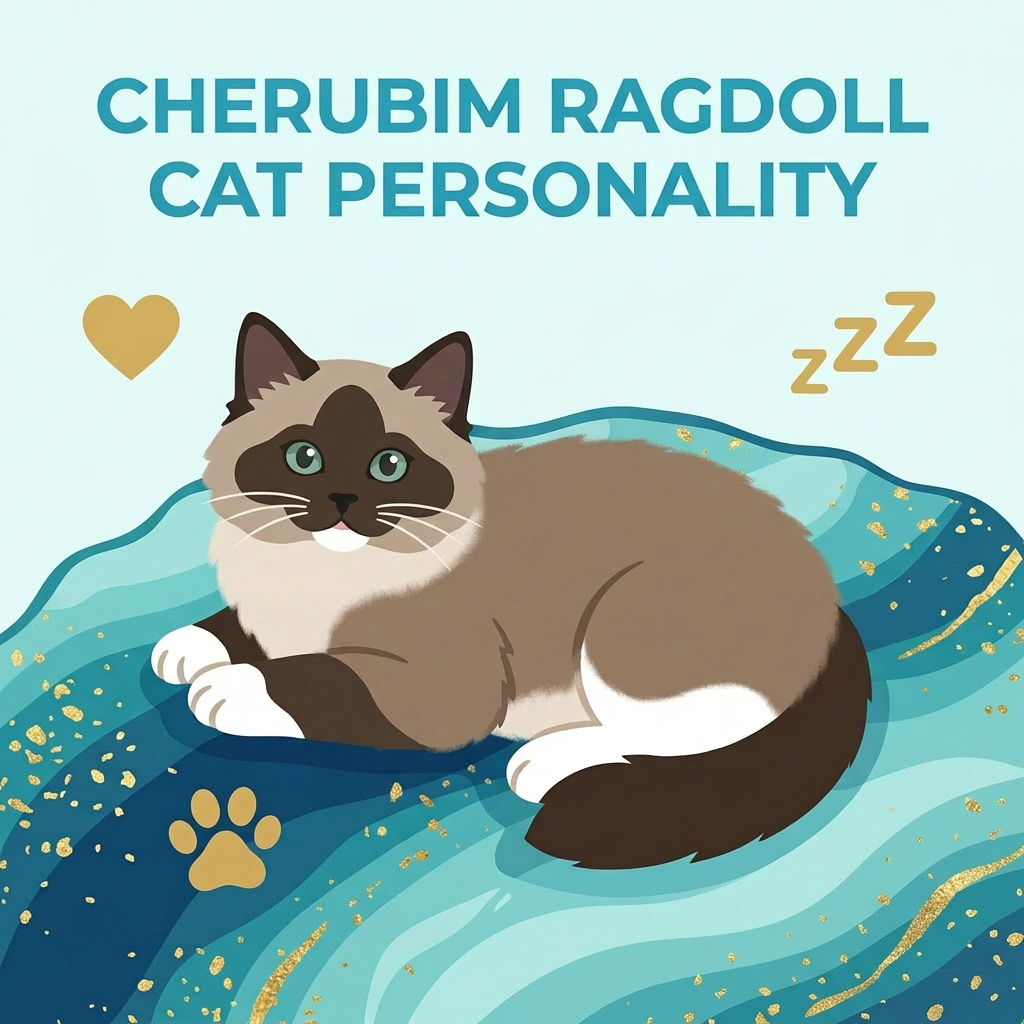
Blue Mink Mitted Cherubim cats are large, affectionate, semi-longhaired cats that I’ve worked with as a breeder. What stands out immediately about them is their soft blue-gray coat, white “mitts” on the paws, and expressive eyes. Unlike some cats that change dramatically as they grow, these kittens show their key color traits from birth, making their development very predictable visually.
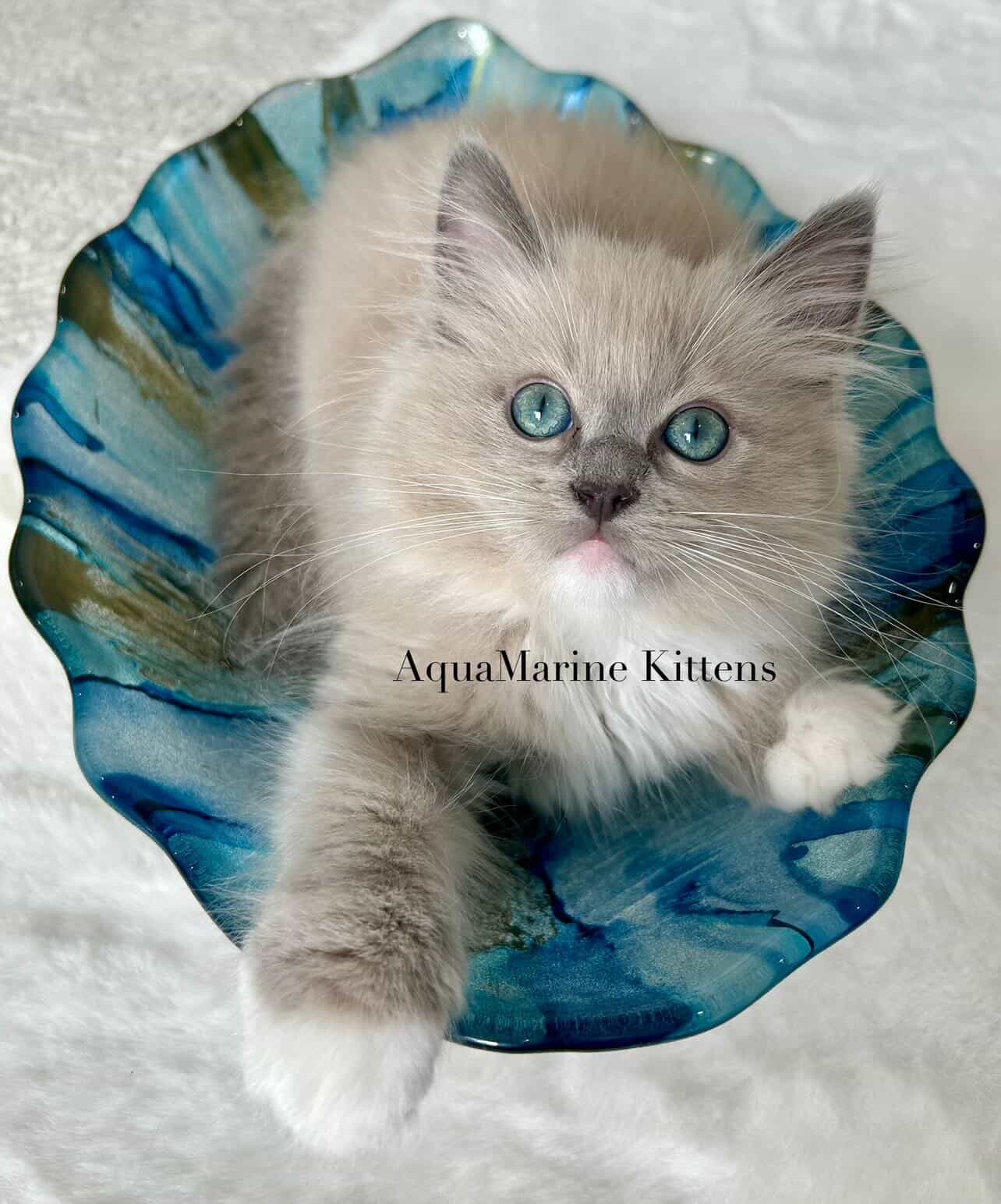
Table of Contents
What Is a Blue Mink Mitted Cherubim?
In simple terms, “blue” refers to their soft gray-blue coat color, “mink” describes the deeper, more even color expression that appears from birth, and “mitted” refers to the white markings on the paws, chin, and belly stripe. Combined, these traits create a balanced, clean-looking cat with a soft and uniform appearance even at a young age.
Coat Appearance and Texture
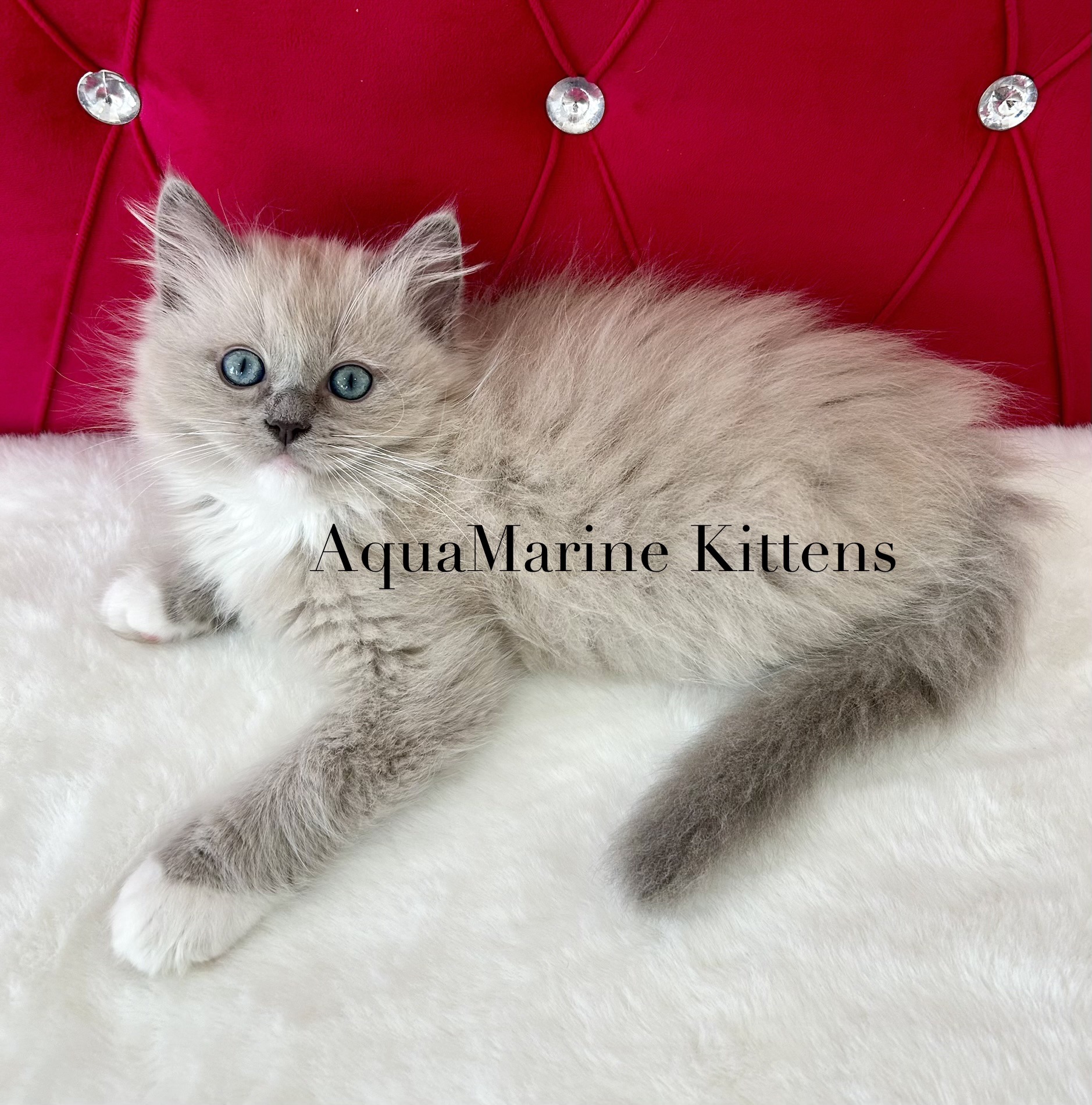
Their coat is one of their defining features. It is dense, plush, and has a naturally full appearance rather than lying flat against the body. Light tends to bring out their blue tones in a soft, even way, and the coat usually becomes richer as the cat matures. From a maintenance perspective, it is relatively manageable compared to other long-haired breeds and generally does not mat easily with regular grooming.
Early Color Development
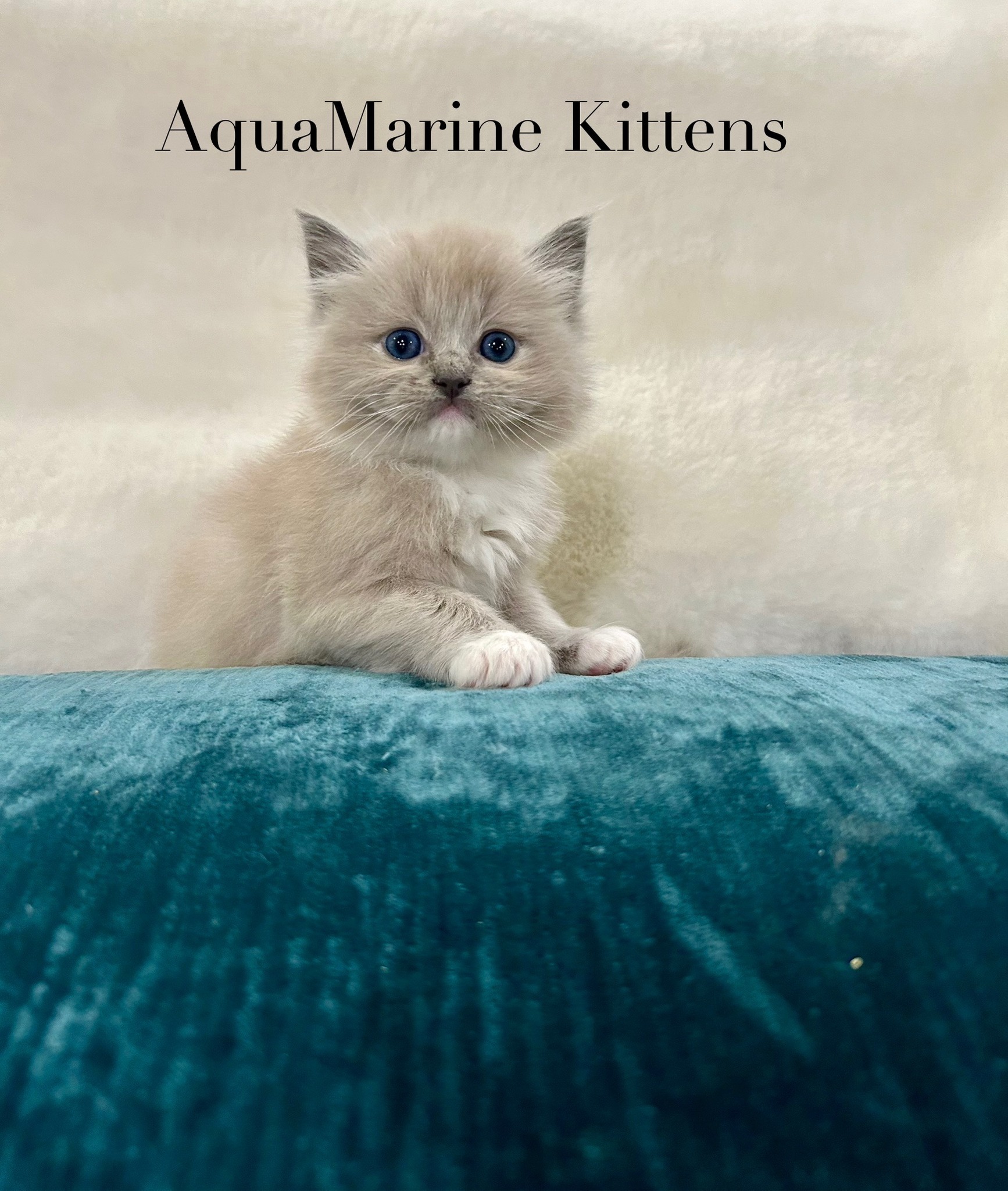
Another consistent trait is their early color development. Both coat pattern and color are visible from birth, including the white markings and base coat tone. There is little uncertainty in how they will look as adults, since their coloration tends to remain stable and even as they grow.
This predictability is one of the things I value most about working with Cherubim cats. Unlike some color expressions that require weeks of waiting to see what you’re dealing with, Cherubim kittens show their cards immediately. The white mitts, the blue base, the eye tone — it’s all there from day one. For more on how Cherubim cats develop compared to traditional Ragdolls, see our guide: Seal Mink Mitted Cherubim Cats: What Makes Them Different.
Eye Color
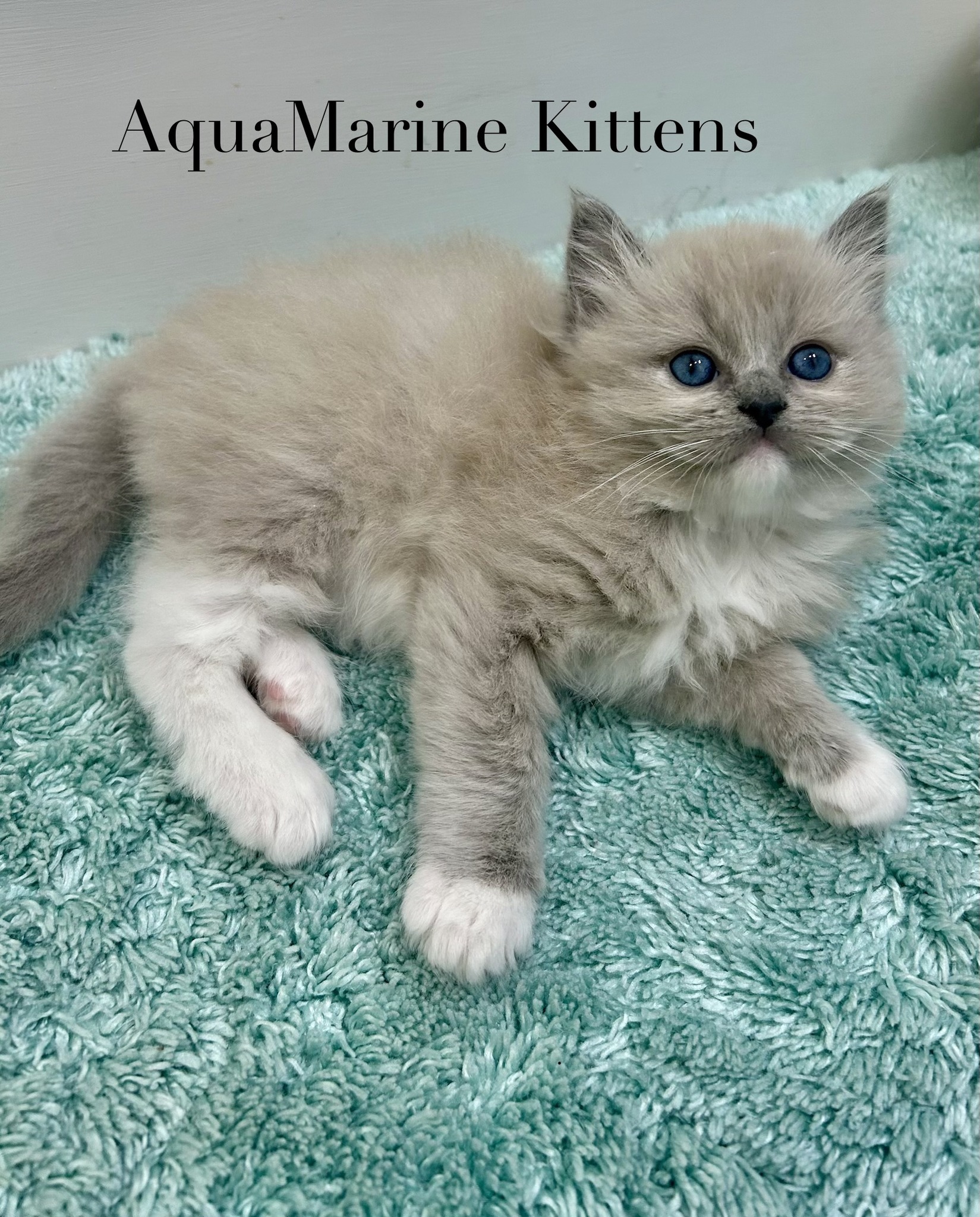
Eye color is another striking feature and can vary between aqua, green, and blue-green shades. The eyes often appear more vivid due to the contrast with the soft blue-gray coat, and their expression can shift slightly depending on lighting, giving them a dynamic, engaging look.
Eye Color Range in Blue Mink Mitted Cherubim
- Aqua. The most iconic mink eye color — a clear, saturated teal that stands out dramatically against the blue-gray coat.
- Blue-green. A cooler, slightly more blue variation that can appear to shift in different lighting conditions.
- Green. Less common but recognized — a deeper green tone that can appear especially vivid in natural light.
- Variable with lighting. All three shades can shift slightly depending on the light source, giving the eyes a layered, dynamic quality that is characteristic of mink eye pigmentation.
The Mink Gene: What It Does
From a genetic standpoint, the mink gene plays a key role in how their color develops. It influences early pigmentation, the depth and richness of the coat color, and can also affect eye color variation. In established breeding lines, these traits tend to be quite consistent, which is one reason they are valued by breeders working with mink Ragdoll-type cats.
For a deeper understanding of mink color genetics and how TICA’s breed standards account for them within the Cherubim Breed Group, TICA’s official breed documentation is the authoritative resource. The TICA Cherubim Breed Standard outlines the accepted color divisions — including mink — and how they are evaluated in competition.
Temperament and Personality
In terms of personality, Blue Mink Mitted Cherubim cats are generally steady and easygoing. They enjoy being near people but are not usually demanding or overly dependent. They adapt well to different home environments and tend to settle into routines without difficulty. Most are playful in a moderate, balanced way rather than highly energetic or chaotic.
Within TICA’s classification, Cherubim cats are placed in the Ragdoll Breed Group and share the same body type and general structure as traditional Ragdolls. In terms of temperament, they are typically calm, people-oriented cats that adapt well to family environments and generally get along with children and other pets when properly introduced.
TICA Classification and Breed Group
Within TICA’s classification, Cherubim cats are placed in the Ragdoll Breed Group and share the same body type and general structure as traditional Ragdolls. What distinguishes them is their accepted color range and pattern categories, which include mink, sepia, and traditional colors, along with patterns such as mitted, bicolor, and solid (without white spotting).
| Feature | Traditional Ragdoll | Cherubim (Blue Mink Mitted) |
|---|---|---|
| TICA Breed Group | Ragdoll Breed Group | Ragdoll Breed Group |
| Body Type | Large, semi-longhaired | Large, semi-longhaired |
| Color Division | Traditional only | Mink, sepia, traditional |
| Color at Birth | Minimal — develops slowly | Full color visible from birth |
| Eye Color | Blue | Aqua, green, blue-green |
| Accepted Patterns | Mitted, bicolor, colorpoint | Mitted, bicolor, solid |
| Temperament | Calm, people-oriented | Calm, people-oriented |
History: From Ragdoll to Cherubim
Originally, these cats were often referred to as “Blue Mink Mitted Ragdolls” when mink lines were first being developed within the broader Ragdoll classification. Over time, as TICA refined its breed group structure, the term “Cherubim” became used to describe Ragdoll-type cats with mink, sepia, and traditional color divisions while maintaining the same overall body type and breed foundation.
This naming evolution reflects how the cat fancy navigates the intersection of genetics, breed standards, and registration requirements — a topic the TICA Ragdoll Breed Section addresses directly in its breed documentation. For a broader look at Ragdoll history and how the breed developed, see our dedicated post: The Ragdoll Cat Origin Story.
How Blue Mink Mitted Compares to Other Cherubim Colors
Blue is one of several color expressions available within the Cherubim mink category. Understanding how it sits relative to the others helps clarify what makes it distinctive — and what it shares with the broader type.
Cherubim Mink Color Variations at a Glance
- Blue Mink Mitted (this cat). Cool blue-gray base coat with white mitts. Eyes range from aqua to blue-green. One of the softest, most even-toned expressions in the Cherubim palette.
- Seal Mink Mitted. Warmer brown-tan base with darker seal points and white mitts. The most common mink expression. For a full breakdown, read our guide: Seal Mink Mitted Cherubim: A Breeder’s Guide.
- Chocolate Mink. A rich, warm chocolate base — rarer in established breeding lines and highly sought after for its depth of color.
- Lilac Mink. A cool, frosty lavender-gray — one of the most delicate expressions in the mink range.
- Flame/Red Mink. A warm, peachy-orange expression that sits at the opposite end of the color spectrum from blue and lilac.
A Breeder’s Perspective
From a breeder’s perspective, one of the most notable aspects of these cats is how early their defining traits appear. Even as kittens, their coat color, white markings, and eye tones are already clearly visible, making evaluation straightforward from a young age. This consistency, combined with their temperament and appearance, is what makes them a distinctive and predictable type within the Ragdoll breed group.
Overall, Blue Mink Mitted Cherubim cats are best described as visually striking, calm-tempered, and developmentally consistent cats. Their combination of soft coloring, expressive eyes, and balanced personality makes them a recognizable and stable type within the broader Ragdoll classification system.
Tom in Action
Tom, our Blue Mink Mitted Cherubim, has been documented from his very earliest weeks. This reel gives you a real sense of what these kittens are like in person — the coat, the eyes, the relaxed and confident temperament that defines the variety.
Frequently Asked Questions
Tom is just one example of the Blue Mink Mitted Cherubim kittens we raise here. All our kittens are health-tested, raised in a real family home, and bred for temperament, coat quality, and genetic consistency. Come see who’s available.
Meet Our Available Kittens