 Skip to content
 Are Ragdolls Hypoallergenic? 5 Honest Reasons They Cause Less Irritation
Are Ragdolls hypoallergenic? It’s one of the most common questions families ask before falling in love with the breed — and it deserves a completely honest answer. The short version: no cat is truly hypoallergenic, and Ragdolls are no exception. But that’s not where the story ends. Many allergy-sensitive families, including my own, find they react significantly less to Ragdolls than to other breeds. Here’s why.

Table of Contents
What Actually Causes Cat Allergies
Before answering whether Ragdolls are hypoallergenic, it helps to understand what’s actually triggering the reaction. Most people assume cat fur is the problem — but the real culprit is a protein called Fel d 1. This protein is produced in a cat’s saliva, skin oils, dander, and even tears. When a cat grooms itself, Fel d 1 spreads onto the coat. As the fur sheds or becomes airborne, the allergen travels with it — landing on furniture, clothing, and eventually in the air you breathe.
Every cat produces Fel d 1. There is no breed that produces zero. This is why no cat — including the Ragdoll — can be truly classified as hypoallergenic. The question of whether Ragdolls are hypoallergenic comes down to how their coat type, shedding pattern, and skin oil levels affect how much allergen circulates in a home environment. According to research published in the Journal of Allergy and Clinical Immunology, Fel d 1 is responsible for the majority of cat-related allergic reactions worldwide — making coat characteristics a genuinely meaningful variable.
Quick Facts: Fel d 1 and Cat Allergies
- Fel d 1 is the primary allergen responsible for most cat allergy reactions
- It’s produced in saliva, skin glands, dander, and tears — not fur itself
- Fur spreads Fel d 1 through grooming and shedding, making coat type relevant
- Male cats generally produce more Fel d 1 than females; unneutered males produce the most
- Individual cats of the same breed can vary significantly in how much Fel d 1 they produce
- No breed is completely hypoallergenic — but some breeds are better tolerated than others
Are Ragdolls Hypoallergenic? The Honest Answer
No — Ragdolls are not hypoallergenic. If you’ve seen breeders claim otherwise, that claim is not accurate. Ragdolls produce Fel d 1 like every other cat, and anyone with a genuine cat allergy can still react to them.
That said, are Ragdoll cats hypoallergenic in the way that matters practically to a family? For many people, the answer is closer to yes than no — not because Ragdolls lack the allergen, but because their particular coat characteristics change how that allergen behaves in the home. Asking are Ragdolls hypoallergenic is really asking: will I react less to a Ragdoll than to another cat? And for a meaningful number of allergy-sensitive people, the honest answer is yes.
It’s also worth noting that the Asthma and Allergy Foundation of America (AAFA) confirms that no cat breed is truly allergen-free, but acknowledges that individual reactions can vary significantly depending on the specific cat and home environment — which is exactly why asking are Ragdolls hypoallergenic still leads to a nuanced and genuinely useful answer.
Our Own Family Experience With Ragdoll Allergies
Before we started raising Ragdolls, my husband struggled with allergies around our previous domestic cats. The reaction was immediate and consistent — if one brushed against him, he’d start sneezing within minutes. If they climbed into his lap, his eyes would go red and irritated. It was frustrating for both of us, because we love cats and always had.
When we made the decision to bring Ragdolls into our home, we genuinely didn’t know what to expect. What we found surprised us. My husband barely reacts to our Ragdolls — even after years of daily exposure. He can hold them, let them sleep nearby, and go about his day without the immediate reactions he used to have. It’s not zero. But it’s dramatically different from what we experienced before.
I share this not as a guarantee — allergies are deeply individual — but because I think firsthand experience is worth more than a theoretical answer to whether Ragdolls are hypoallergenic. For our family, the difference has been real and lasting.
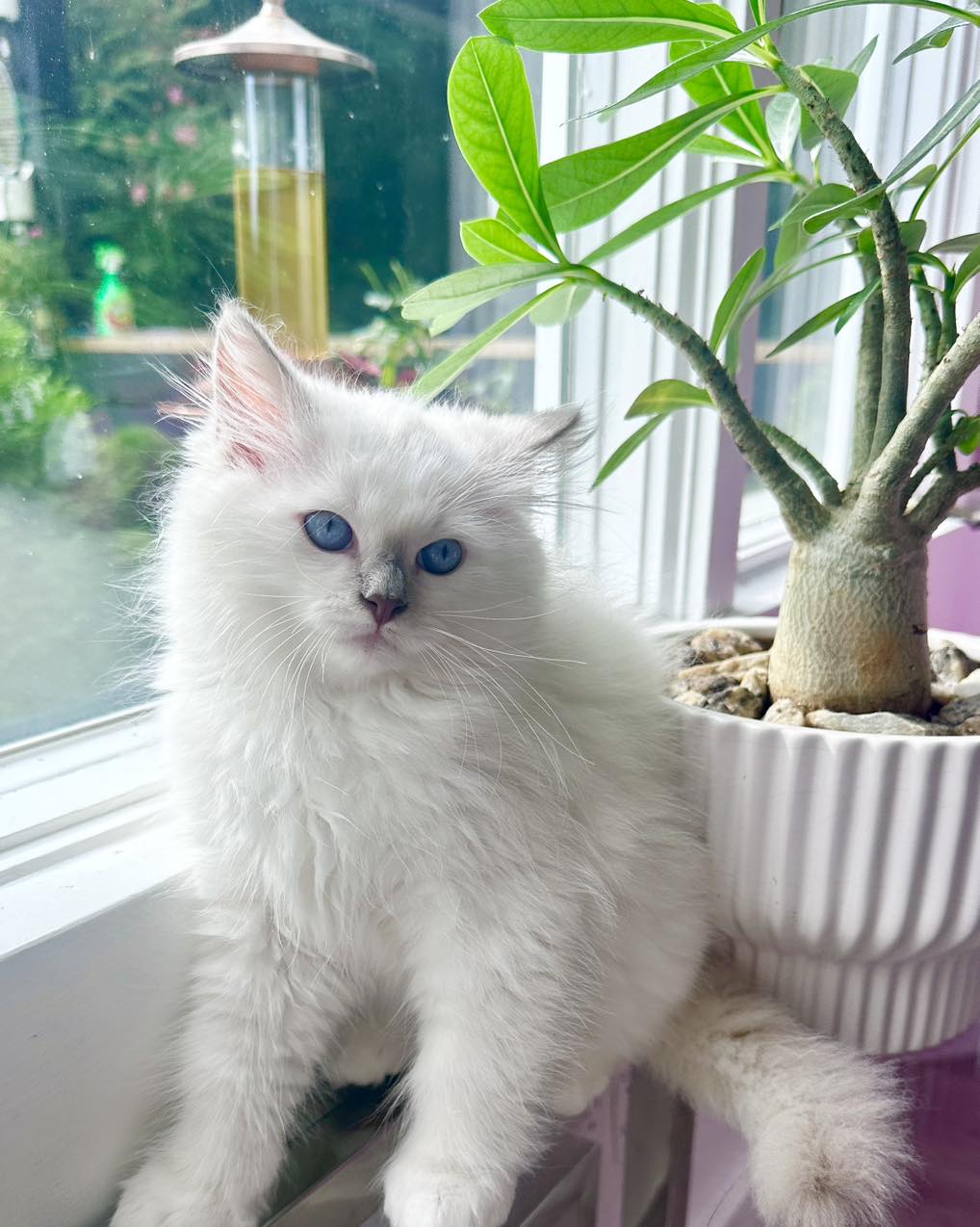
5 Reasons Are Ragdolls Hypoallergenic-Friendly for Many People
Even though Ragdolls aren’t technically hypoallergenic, there are five specific reasons why allergy-sensitive people often find them more manageable than other breeds.
Ragdolls have a smooth, silky coat that many describe as light and airy rather than thick or woolly. Because of this texture, Fel d 1 may not become airborne as quickly as it does with denser or coarser coats. The allergen is still present — it just disperses differently, which can make a meaningful difference in day-to-day air quality for people asking are Ragdolls hypoallergenic.
This is one of the most practically significant differences. Without a dense undercoat, Ragdolls shed in a lighter, softer way. There’s less fluff flying around, fewer loose layers for allergens to cling to, and less fur settling on furniture and fabrics throughout the day. For allergy-sensitive households, less airborne fur means less airborne Fel d 1.
Fel d 1 is connected to a cat’s skin oils — it travels on those oils and sticks to the coat during grooming. Many Ragdolls tend toward lower oil production compared to other breeds, which can mean less allergen attaches to each hair. This doesn’t eliminate the protein, but it may reduce the overall load in the environment.
Double-coated breeds can go through heavy seasonal blowouts that flood a home with shed fur and allergens in a concentrated period. Ragdolls shed gradually and steadily throughout the year instead. For allergy-sensitive households, this makes air quality and cleaning far more manageable — there’s no sudden spike in Fel d 1 exposure the way there can be with other breeds.
This isn’t a promise — it’s an observation I hear consistently from families and see firsthand in my own home. People who previously couldn’t tolerate cats find they can live comfortably with Ragdolls. The combination of coat characteristics, lower shedding, and potentially lower individual Fel d 1 output adds up to a genuinely different experience for many allergy-sensitive people who’ve been wondering are Ragdolls hypoallergenic.
Watch: Are Ragdolls Hypoallergenic? A Closer Look
If you’re still weighing whether Ragdolls are hypoallergenic enough for your home, this video gives a helpful visual overview of the Ragdoll coat and what to expect living with the breed as an allergy sufferer.
Video: A real-world look at Ragdoll coats and how allergy-sensitive families experience the breed day to day.
Practical Tips for Allergy-Sensitive Ragdoll Owners
Even if you find that Ragdolls are hypoallergenic enough for your household, there are simple steps that make a real difference in keeping allergen levels low in your home.
A HEPA air purifier in rooms where your cat spends the most time significantly reduces airborne Fel d 1. Open windows when possible and replace HVAC filters regularly.
Weekly brushing with a soft slicker removes loose fur before it sheds naturally — keeping it in the brush rather than on your sofa and in the air. Do this outdoors if possible.
If allergies are significant, limiting the cat’s access to the bedroom gives your body hours of lower-exposure recovery time each night — making daytime exposure far more tolerable.
Fel d 1 settles on fabric surfaces. Vacuuming furniture and washing cat bedding, blankets, and your own clothing frequently keeps environmental allergen levels consistently lower.
Unneutered males produce significantly more Fel d 1. All AquaMarine kittens are spayed or neutered before going home, which helps keep allergen levels at the lower end from day one.
Gently wiping your Ragdoll with a slightly damp cloth a few times a week removes surface allergens from the coat without the stress of a full bath. Many cats tolerate this well.
How to Test Your Reaction Before Committing to a Ragdoll
Even though many people find that Ragdolls are hypoallergenic enough to live with comfortably, the only way to know if Ragdolls are hypoallergenic enough for your specific sensitivity is through personal exposure. Allergies are deeply individual — what works well for one person may still be difficult for another.
If you’re seriously considering a Ragdoll and have known cat allergies, spending time with one before committing is genuinely important. Visit a breeder, spend time with a friend’s Ragdoll, or arrange to meet the specific kitten you’re considering. Pay attention to how you feel during and in the hours after exposure — not just in the moment. The American College of Allergy, Asthma & Immunology recommends direct exposure testing as the most reliable way to gauge your individual response to any specific cat before making a commitment.
If you’re asking are Ragdolls hypoallergenic because you or someone in your family has cat allergies, we’re happy to talk through it honestly before you make any commitment. We’d rather you have the right cat for your home than make a decision that doesn’t work out. Reach out before you’re on our waitlist — it’s always a good conversation to have first.
Frequently Asked Questions: Are Ragdolls Hypoallergenic?
Our Ragdoll and Cherubim kittens are raised in a real family home — socialized, health-tested, and ready for yours. Come see who’s available.
Meet Our Available Kittens