Ragdoll Colors & Patterns: The Complete Breeder’s Guide
If you’ve been researching Ragdolls for a while, there’s a good chance you’ve felt overwhelmed by ragdoll colors & patterns. You’ve looked at photos, read articles, and somehow still feel unsure about what you’re actually looking at. That’s completely normal — and this guide is going to fix that.
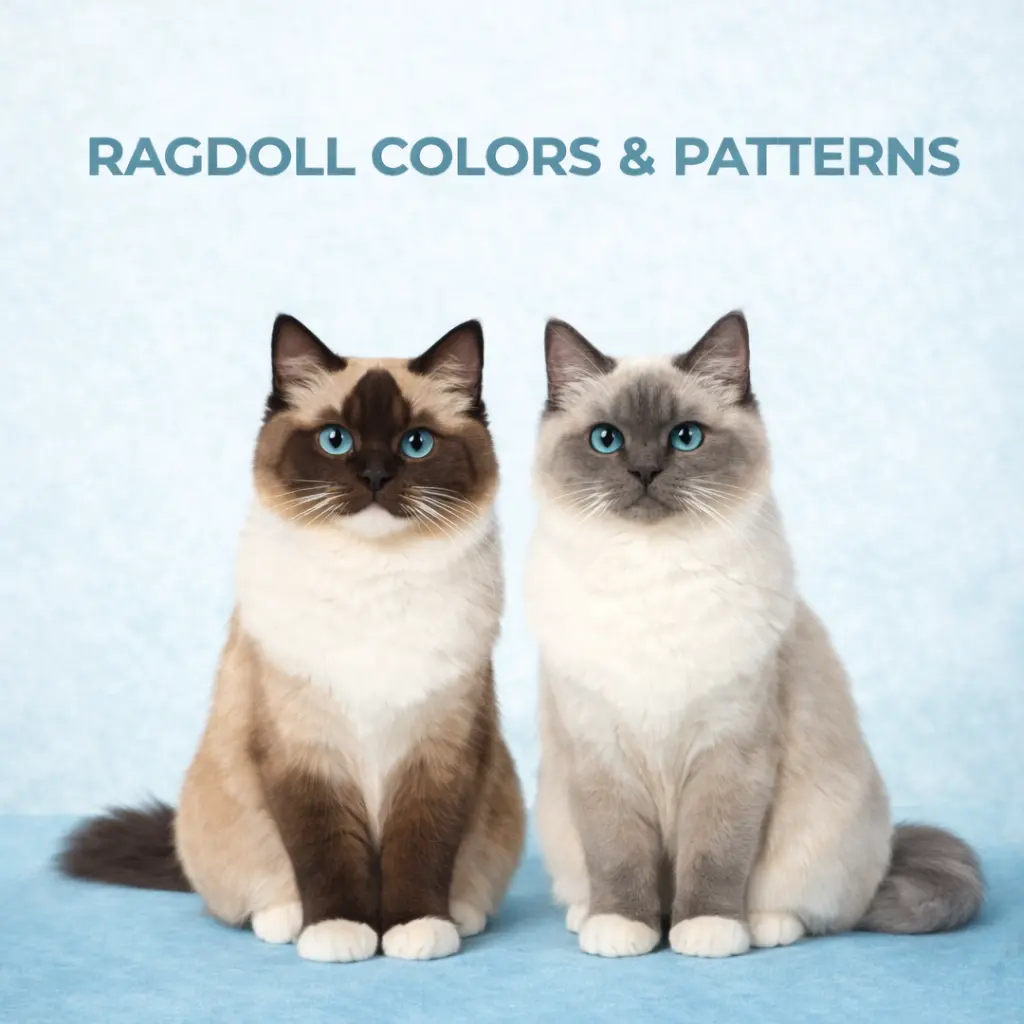
Table of Contents
As a breeder at AquaMarine Kittens here in Virginia, explaining ragdoll colors & patterns is part of my everyday conversations. Most people don’t want complicated genetics or fancy terms — they just want clear answers so they can confidently choose the right kitten. This guide is written exactly the way I explain things during calls.
All Ragdolls Are Pointed — and Always Have Blue Eyes
Before getting into ragdoll colors & patterns, there’s one very important thing to understand: all traditional Ragdolls are a pointed breed. That means their bodies stay lighter, their face, ears, legs, and tail are darker — and they always have blue eyes.
This comes from a temperature-sensitive gene. The cooler parts of the body develop darker color, while the warmer areas stay lighter. That same gene is what gives Ragdolls their signature blue eyes. Every single ragdoll colors & patterns combination you’ll ever see is built on this foundation.
Simple Genetics: How Ragdoll Colors Work
I like to explain genetics in the easiest way possible. Here’s all you need to know to understand ragdoll colors & patterns at a basic level:
The Color Family Tree
- Seal — the darkest base color
- Blue — the dilute version of seal (softer gray tone)
- Chocolate — a lighter, warmer brown base color
- Lilac — the dilute version of chocolate (frosty pinkish-gray)
- Red / Flame — a separate color group entirely
- Cream — the dilute version of red
- Tortie — a combination of two or more colors, typically including red or cream
“Dilute” simply means the color appears softer and lighter — the same hue, turned down. Understanding this one concept makes the whole ragdoll colors & patterns system click into place.
The 7 Ragdoll Colors Explained
Here’s a look at each color in the ragdoll colors & patterns spectrum — including which ones we produce at AquaMarine Kittens and which we don’t.

The most recognizable Ragdoll color. Deep, rich brown points over a creamy or beige body. Seal kittens darken significantly as they grow — one of the most popular ragdoll colors & patterns combinations overall.

The dilute version of seal. Instead of dark brown, you see a soft gray tone. Blue Ragdolls look very calm and gentle and photograph beautifully. Seal and blue are my personal favorites — that classic Ragdoll look that never goes out of style.

Lighter and warmer than seal — similar to milk chocolate. It’s considered a rarer color in the breed. At AquaMarine Kittens we produce chocolate very rarely, so when we do, those kittens are usually reserved quickly.
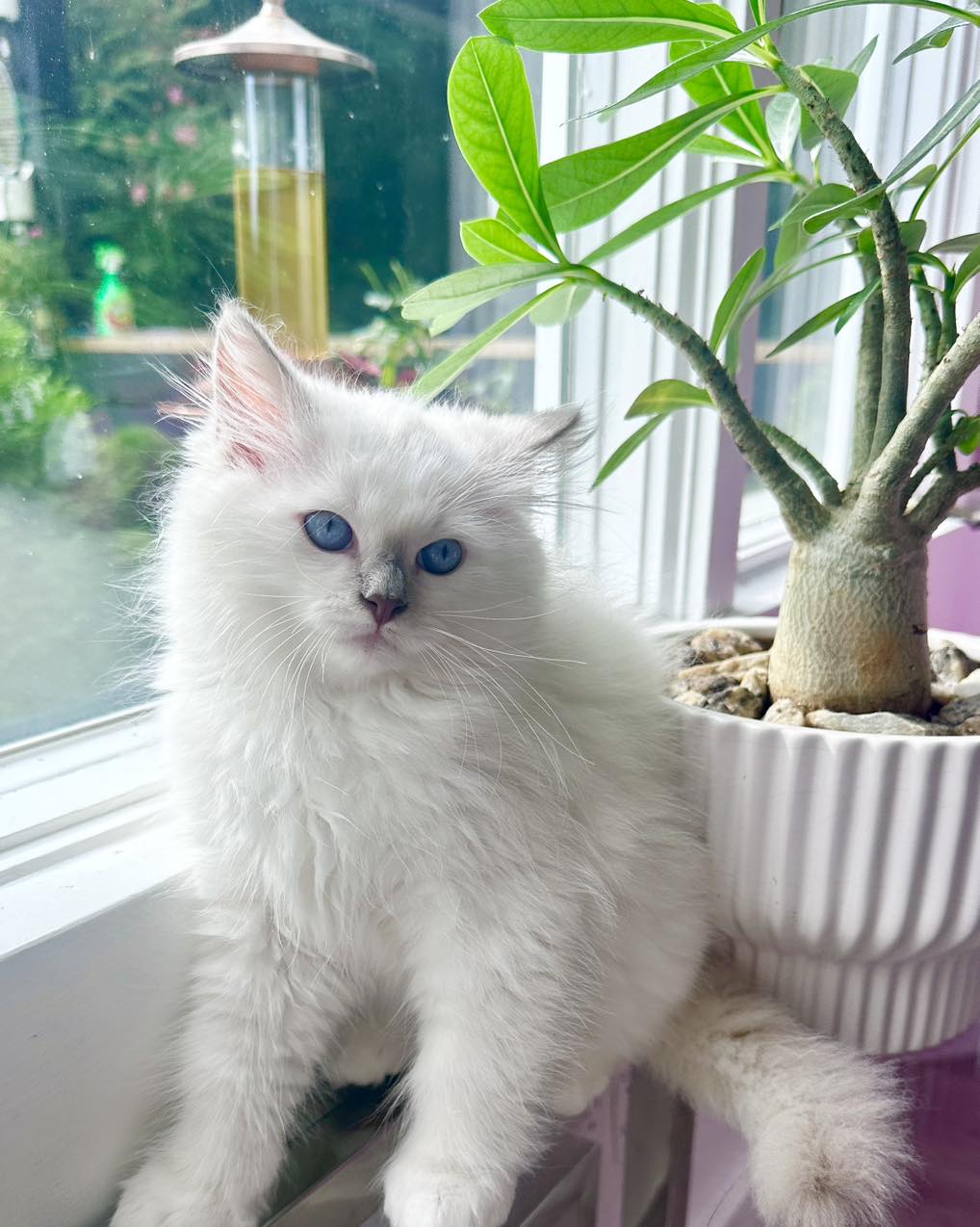
The dilute of chocolate — pale, frosty, and slightly pinkish-gray in tone. One of the softest-looking ragdoll colors & patterns combinations you’ll see. This was our very first lilac; he’s now enjoying life with his family.
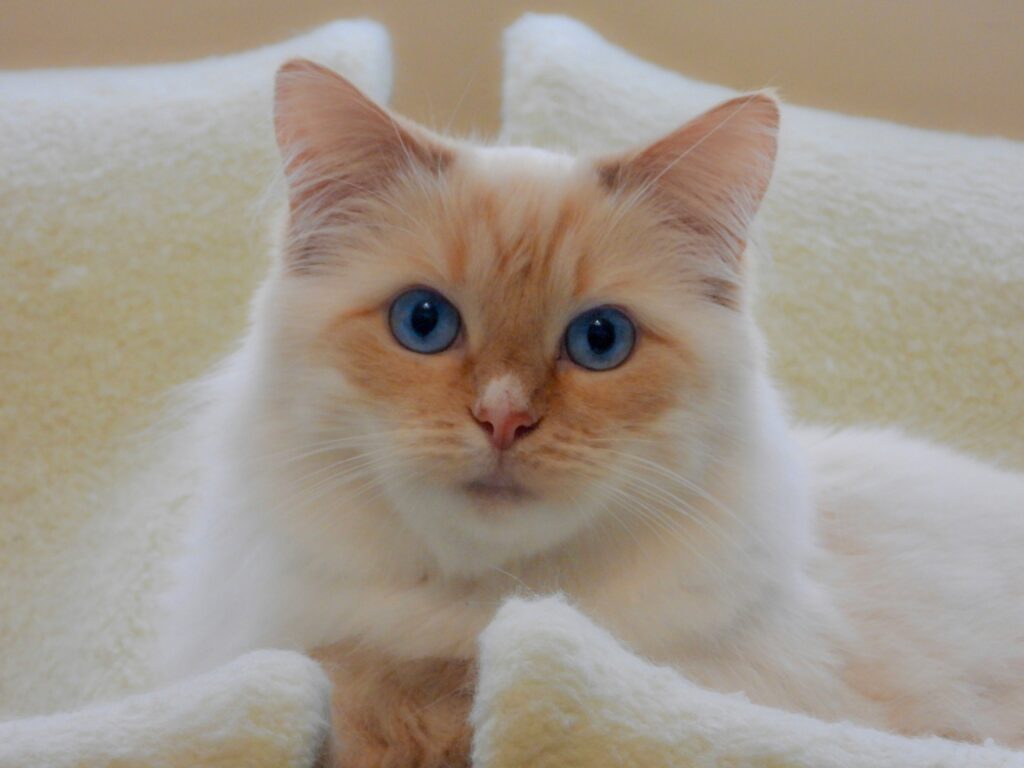
Red Ragdolls have orange to reddish points — bold and eye-catching. This is a reference photo since we don’t produce this color at our cattery.
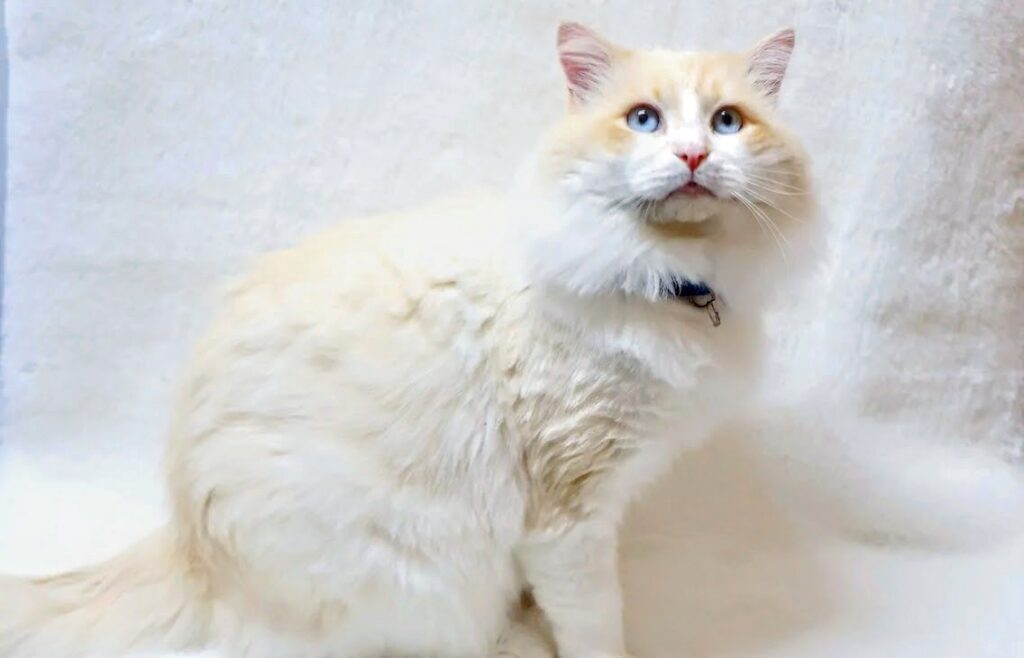
The dilute version of red — very soft and pastel. This was one of our very first kings, now retired. We do not produce cream Ragdolls currently.

Tortie Ragdolls combine two or more colors in their points — often including red or cream. The patching creates a completely unique look on every individual cat. We do not produce tortie Ragdolls in our program.
Understanding Ragdoll Patterns
Patterns describe where the color shows up on a Ragdoll. The color tells you the shade — seal, blue, chocolate, lilac — while the pattern tells you how that color is distributed across the body. Ragdoll colors & patterns always work together: you’ll describe a kitten by both, for example “seal bicolor” or “blue mitted lynx.”

The classic, cleanest Ragdoll pattern. No white markings anywhere on the body. The points — ears, face mask, legs, and tail — are darker, while the body stays lighter. What you see is pure color, nothing else.
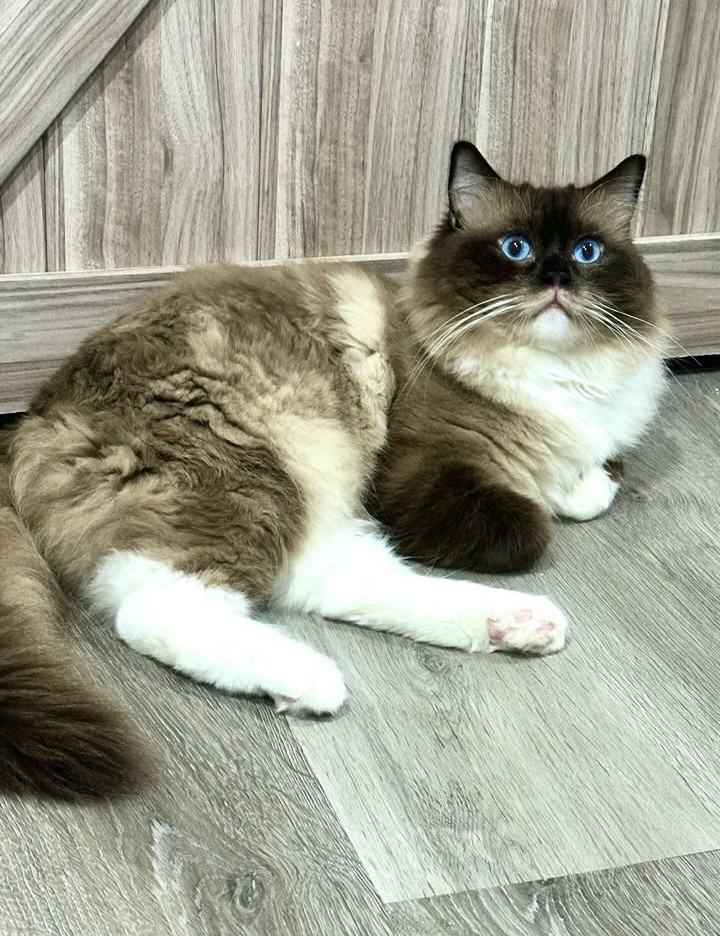
Looks like a colorpoint but with small areas of white. White appears on the paws and often the chin. Some mitted Ragdolls also have a “blaze” — a white stripe running down the center of the face. Small mismarks on an otherwise white paw are completely normal and make each kitten unique.
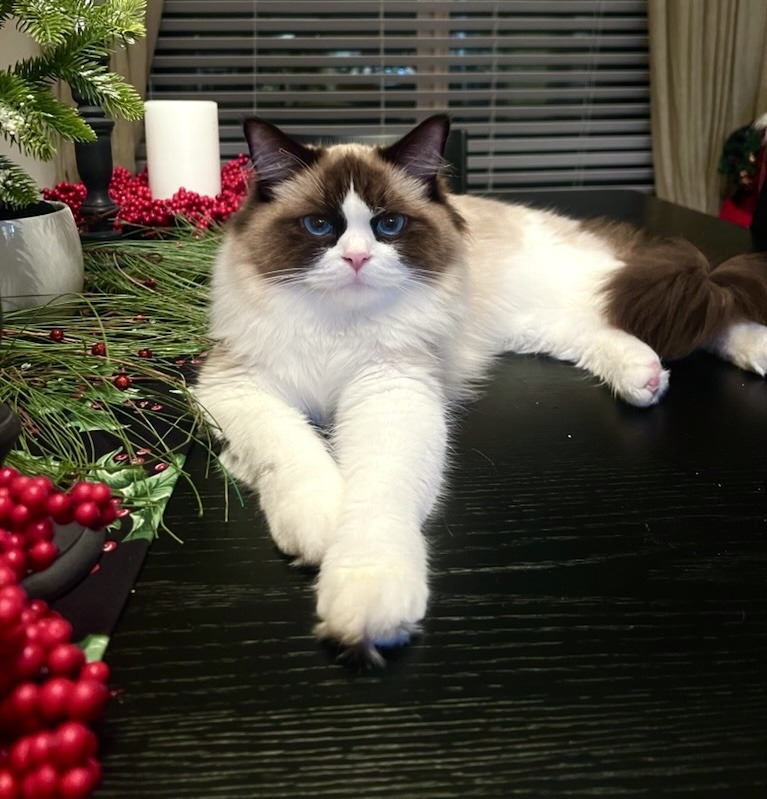
These have more white than mitted cats. White typically covers the chest, belly, and all four legs, and there is often an upside-down “V” shape on the face. Irregular markings — called mismarks — are normal and still classify as bicolor. It’s one of the most striking ragdoll colors & patterns combinations.
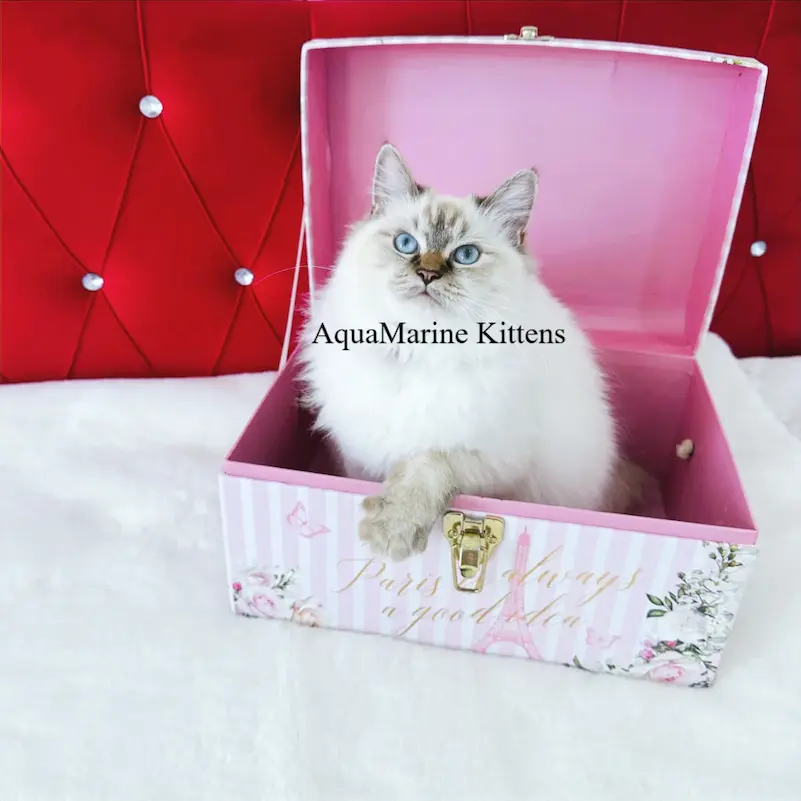
Lynx Ragdolls have faint tabby stripes overlaid on any of the base patterns above. The lynx markings don’t change the underlying pattern classification — they’re an extra detail on top. You can have a seal lynx colorpoint, a blue lynx bicolor, and so on. Our previous chocolate point lynx female is pictured here.
Watch: Ragdoll Colors & Patterns Explained
If you prefer seeing ragdoll colors & patterns in motion rather than just photos, this video gives a helpful real-world walkthrough of what each combination looks like before you choose a kitten.
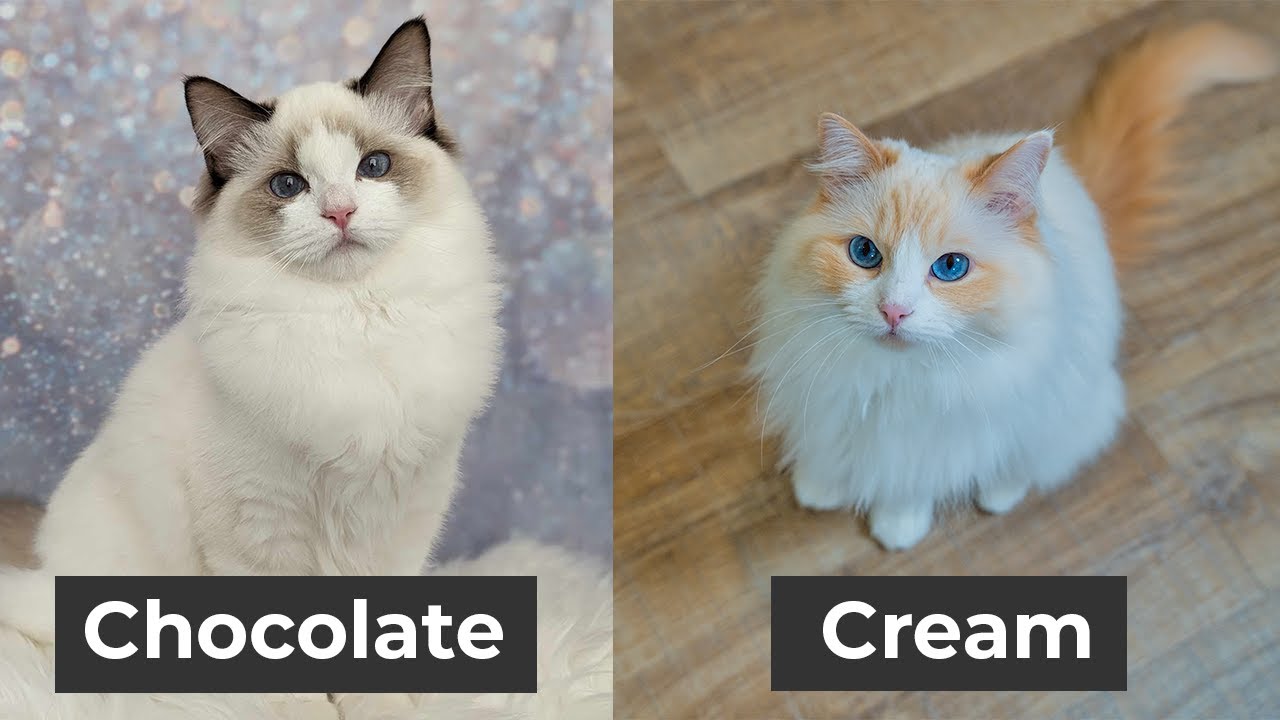
Video: A visual guide to ragdoll colors & patterns — helpful before choosing your kitten.
Quick Reference: Pattern Cheat Sheet
Here’s the one-minute summary of everything you need to remember about ragdoll colors & patterns. Screenshot it, print it, or just keep it in mind when you’re browsing kitten photos.
Ragdoll Patterns at a Glance
Mismarks in mitted or bicolor kittens are completely normal. They don’t affect health, temperament, or how loved a cat will be — they’re just part of that kitten’s unique signature. For official pattern diagrams and breed standards, visit TICA’s Ragdoll Breed Standards.
More From AquaMarine Kittens
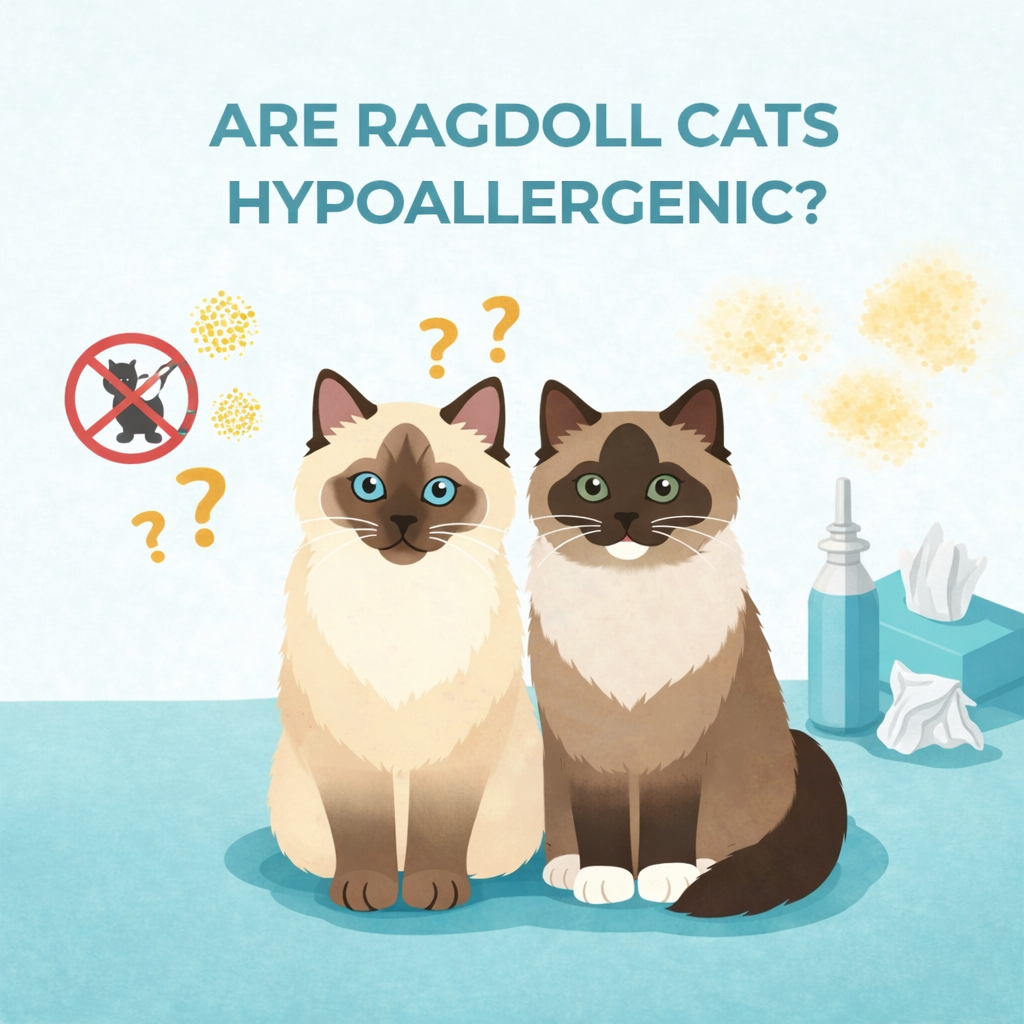
Now that you understand ragdoll colors & patterns, the next question most families ask is whether Ragdolls are safe for people with cat allergies. We’ve written a full honest guide on that too.
📖 Are Ragdolls Hypoallergenic? — the science behind Fel d 1, our own family experience, and practical tips for allergy-sensitive households.
Our Ragdoll and Cherubim kittens are raised in a real family home — socialized, health-tested, and available in seal, blue, chocolate, and lilac. Come see who’s available.
Meet Our Available Kittens


I loved this post! The variety of colors and patterns in Ragdolls is just stunning. The photos really showcase their beauty, especially the Blue Bicolor and the Tortie. I didn’t know there were so many different looks! Thanks for sharing these gorgeous kitties!
Oh yeah and it is really hard to choose which are the cutest!